June 13, 2026
Matt Johnson
There are media events, and then there are media events. Savage Arms’ mid-May gathering at the F5 Productions grounds near Pine City, Minn., fell firmly into the latter category. The invite list was deep and varied — NRA Publications, Outdoor Sportsman Group, digital creators, social media producers — a cross-section of the modern firearms media world assembled in east-central Minnesota to put Savage’s newest offerings through their paces. The setting was ideal: wide-open shooting lanes, varied steel at distance, and the kind of early-summer Minnesota weather that reminds you why people actually live there.
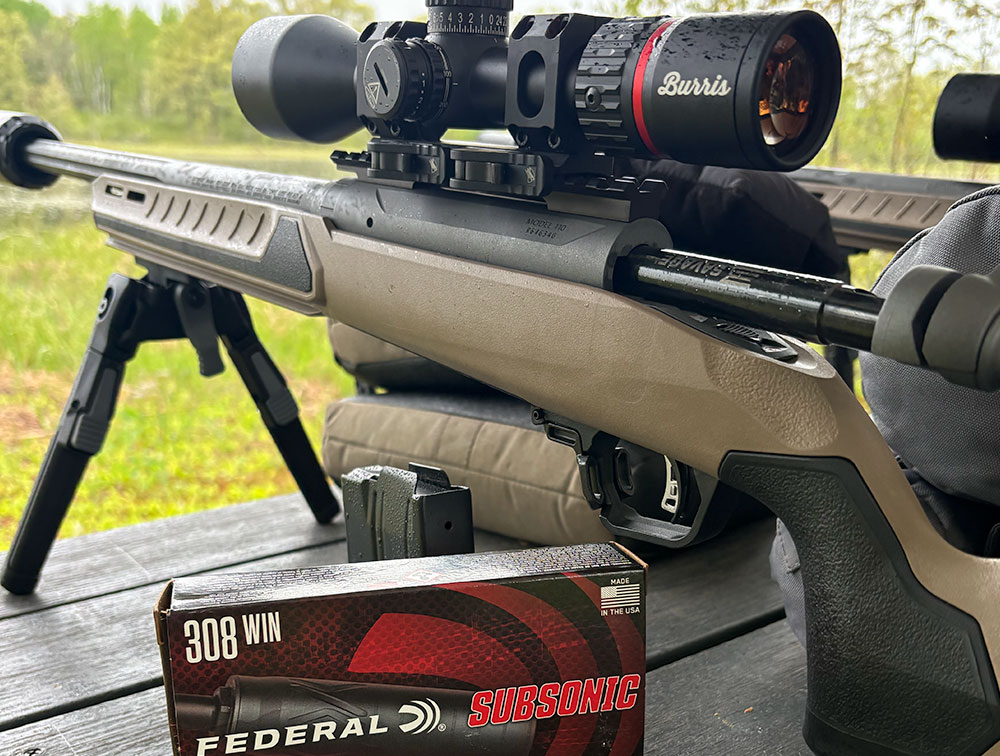
The headline products at the event were two: a new Savage handgun slated for release later this summer (more on that when Savage gives the green light), and the rifle that stole the show — the new Savage 110 Tactical. We also had quality trigger time on the 110 Precision. For a hunter who has spent nearly four decades carrying a rifle through the field, this range day turned into something I didn’t entirely expect: a genuine reevaluation of what’s possible at distance, and at what price point.
The Model 110 isn’t a new name. Savage has been building on this platform for more than 80 years, and it has earned its reputation the old-fashioned way — by being accurate, reliable, and honest about what it is. But what Savage has done with the 110 platform over the last decade is something worth paying attention to. The expansion and modernization of the lineup hasn’t diluted the heritage — it’s built on it in meaningful ways.
The 110 Tactical is the clearest expression of where that evolution is headed. This isn’t a hunting rifle with a Picatinny rail bolted on as an afterthought. It’s a purpose-built precision platform designed for shooters who want to step into National Rifle League (NRL) competition, push their long-range shooting skills, or simply own a rifle that performs well beyond what most hunters ever ask of their gear — without the sticker shock that often accompanies that kind of capability.
“The Model 110 has been around for 80-plus years, but the revisions and expansion of the platform the last decade has truly built on its legacy.” — Matt Johnson, Gun Talk Media
Savage’s AccuTrigger remains one of the most significant developments in production rifle triggers in the last 20 years, and it continues to be the foundation on which the 110’s accuracy reputation rests. On the range in Pine City, the trigger performed exactly as expected — crisp, consistent, and tunable. When you combine a quality trigger with Savage’s button-rifled, free-floated barrel, you get a factory rifle that routinely delivers sub-MOA performance without requiring a gunsmith visit before you can actually use it.
Accuracy was never in question at this event. What the 110 Tactical proved was that it could deliver that accuracy under field conditions, across multiple shooters with varying experience levels, at distances that would make most hunting rifles tap out.
Here’s a feature that sounds like a spec-sheet bullet point until you actually use it in a group shooting scenario: the 110 Tactical’s toolless adjustable buttstock and cheek riser. A button press extends or collapses the length of pull. A quick turn of a knurled screw raises or lowers the cheek pad. No Allen wrench. No fumbling. No excuses.
In practice, this meant that at a station with a rifle set up for a 6-foot adult male, a smaller shooter could reconfigure the fit in under 30 seconds and get behind it effectively. Kids and adults shooting the same rifle back to back — no problem. For a hunting family, a youth program, or anyone running a shared rifle in competition, this is the kind of thoughtful ergonomic design that doesn’t get enough credit.
You might set it once and leave it. But having the option to change it in seconds without tools is genuinely useful, not just a checkbox feature.
At right around 9 lbs. before optic, suppressor, and bipod, the 110 Tactical is a substantial platform. That’s by design. Weight is your friend at distance — it dampens recoil, reduces muzzle movement, and makes follow-through easier. Precision long-range shooting rewards mass in ways that hunting in the timber does not.
That said, the 110 Tactical isn’t a bench queen that falls apart the moment you have to move it. In a pinch, it’s manageable off-hand — not fun, but doable. Think of it as a rifle that is primarily optimized for what it was designed to do, which is engage targets accurately at significant distance, while remaining functional in other roles when needed.
| Platform | Savage Model 110 — bolt-action, 80+ year legacy |
|---|---|
| Caliber (Event) | .308 Winchester / .22 LR (rimfire version) |
| Weight | ~9 lbs. (before optic, suppressor, bipod) |
| Trigger | Savage AccuTrigger — adjustable, user-tunable |
| Stock | Toolless adjustable LOP and cheek riser |
| Suppressors | .308: Savage AC30 BOB (Back-over-Barrel) │ .22 LR: Savage AccuCan AC22 |
| Optics (Event) | Burris Veracity, Burris XTR PS, Burris Fullfield |
| Ammo (Event) | Federal Premium (.308), CCI (rimfire) |
| Ideal For | NRL competition entry, long-range precision, hunter training, suppressor host |
All of the 110s on the line in Pine City were suppressed, and for good reason — the 110 platform has become one of the more thoughtful suppressor hosts in the production rifle market. Savage has designed these rifles with suppressor-ready threading and features that work with cans rather than fighting them.
The .308 rifles ran the new Savage AC30 BOB — Back-over-Barrel — a design that positions the suppressor to extend back over the barrel rather than only forward of the muzzle. The practical benefit is a shorter overall rifle length compared to a traditional front-mounted can while maintaining suppression performance. It’s an elegant solution to a real problem, and it makes the 110 Tactical a more manageable package when running suppressed.
The rimfire versions wore the Savage AccuCan AC22, a lightweight dedicated rimfire suppressor that pairs naturally with the .22 LR 110. Together, the combination produces a hearing-safe shooting experience that is, frankly, a revelation if you’ve spent any time around unsuppressed rimfire rifles.
The event included a direct comparison test that produced the single most interesting data point of the day: subsonic versus supersonic ammunition at 430 yards with the .308. The noise difference between the two loads was significant enough on its own — subsonic rounds through the AC30 BOB are impressively quiet. But the shot placement difference at distance was the real eye-opener.
“The difference in shot placement between subsonic and supersonic loads at 430 yards was significant — like almost 6 feet significant. That’s not a rounding error; that’s a miss.”
Nearly 6 feet of vertical difference at 430 yards. That’s not a minor ballistic note — that’s the difference between a hit and a clean miss. If you’re running a suppressor and subsonic ammunition for the hearing-safe experience, which is entirely reasonable, you need to understand that you are shooting a fundamentally different ballistic solution than full-power loads. Same rifle, same zero, very different impact point at distance. Know your ammo. Know your drops. Test both.
The 110s at the event were paired with Burris optics across three distinct models, giving attendees a chance to compare performance across the lineup. The new Burris Veracity, the recent XTR PS, and the revived Fullfield each found their way onto a rifle during the event — a range of price points and feature sets that matched well with the 110 platform’s own positioning as a high-value precision option.
Burris has long been a strong value play in the optics market — not flashy, not the most talked-about brand at the counter, but consistently solid glass with real-world performance that punches above its price point. On a precision bolt gun, where every component in the system matters, having reliable glass that holds zero and gives you a clean sight picture is the baseline. The Burris lineup cleared that bar comfortably throughout the day.
For shooters building out a 110 Tactical or 110 Precision of their own, the Burris Veracity series is a natural pairing — a full-featured hunting and precision optic with a clean FFP reticle option that suits the rifle’s NRL-ready character.
Every range day has a moment that reframes your thinking. At F5 Productions in Pine City, that moment came from the rifle nobody expected to be the conversation piece: the .22 LR version of the 110 Tactical.
On paper, a rimfire precision rifle sounds like a training prop. In practice, at this event, it was the most impressive firearm on the line. We were ringing — or more accurately, thinking steel at 350 yards with a .22 LR. The best shots of the day connected with steel positioned across a pond at 195 yards with a left-to-right wind working against every shooter. The rimfire handled it. Not every shot, not without technique, but consistently enough to be genuinely remarkable.
“The rimfire version was the truly impressive firearm of the event. Easily ringing steel at 350 yards — OK, so maybe the steel didn’t ring as much as it tinked.”
Here’s why this matters beyond the novelty: the .22 LR version of the 110 Tactical is a near-exact mechanical and ergonomic replica of the .308 centerfire version. Same chassis, same adjustable stock, same weight profile. The shooting technique required to connect at 300 yards with a rimfire is fundamentally similar to what it takes to shoot a .308 out to 500-600 yards. Holdover calculation, wind reading, trigger control, follow-through — the same principles apply.
What that means practically is that you can train for precision long-range shooting on the rimfire platform at a fraction of the ammunition cost, then transfer those skills directly to the centerfire. A .22 LR round costs a fraction of a .308 cartridge. If you’re serious about developing your long-range shooting skills without spending a significant amount of money on ammunition, the 110 rimfire isn’t just a fun range toy — it’s a legitimate training system.
Consider the math. Developing proficiency at 300-500 yards on a .308 requires volume — a lot of trigger pulls, a lot of adjustments, a lot of rounds downrange. At current .308 ammunition prices, building that skill set gets expensive quickly. The 110 rimfire changes that equation significantly. You’re not just saving money; you’re also shooting in a lower-recoil, lower-noise package that allows for more focused technique work without fatigue.
And then, when you pick up the .308 version, the manual of arms is identical. You’re not relearning anything — you’re just scaling the ballistics.
As a hunter of nearly 40 years, I carry a particular perspective to range days like this one. I know my capabilities, I know my distances, and I know that until recently, long-range precision shooting existed in a different part of my shooting life than hunting did. The skills overlap more than I previously gave them credit for — but the equipment and the mindset required for NRL-style competition felt like a separate world, and an expensive one at that.
The 110 Tactical changes that calculus. In the configuration we ran at F5 — suppressed, Burris glass on top, Federal ammunition underneath — I am confident I could operate effectively out to 800 yards with proper preparation. Not guessing. Not hoping. Confident, based on what I watched this rifle do in Pine City.
For a shooter looking to enter NRL competition for the first time, the 110 Tactical represents a legitimate starting point that doesn’t require compromise. You are not buying a budget rifle that will need to be replaced once you develop your skills. You are buying a competitive tool from the starting line. The AccuTrigger, the adjustable chassis, the suppressor-ready platform — these aren’t beginner features. They’re the same features competitive shooters demand.
Here’s the honest competitive positioning of the 110 Tactical in the precision rifle market: you could spend two to three times as much on a comparable configuration from other manufacturers and not see a proportional improvement in field performance. There is a ceiling to what a production rifle needs to do to be genuinely competitive, and the 110 Tactical operates well above that ceiling.
Add a quality mid-range optic from Burris, Vortex, or Sig Sauer, a set of rings or a quality one-piece mount, and a suppressor if your state allows, and you have a complete long-range precision system capable of connecting at 400-500 yards right out of the box — with the chassis and platform to grow your skills to 800 yards and beyond as your technique develops.
“In the scheme of shooting sports setups, this is affordable. You have a plethora of comparable glass to put on top and you could be shooting dots at 400-500 yards in no time and hitting them effectively.”
Savage Arms didn’t reinvent the wheel in Pine City. What they demonstrated is something arguably more valuable — that they understand where their customer base is going and have built the product that meets them there.
The 110 Precision is the precision shooter’s workhorse: accurate, feature-rich, and built for the shooter who already knows what they want. The 110 Tactical is the more interesting story — a rifle that bridges the gap between the hunting world and the growing long-range and NRL competition community in a way that feels natural rather than forced.
For hunters who have ever watched a 3-Gun or precision rifle match and thought, ‘I’d like to try that but I don’t want to buy a second dedicated competition rifle,’ the 110 Tactical is your answer. For the newer shooter who wants to start competitive shooting on a platform that won’t limit them, it’s the right first rifle. And for the training-minded shooter who wants to build long-range skills without bleeding through expensive centerfire ammunition, the rimfire version of this platform is, genuinely, one of the most practical training tools in the current market.
Savage has been building the Model 110 for over eight decades. In Pine City, Minn., on a clear May morning, it was clear they haven’t run out of ideas yet.
Matt Johnson is a field correspondent for Gun Talk Media and a contributing producer for the Guns & Gear show on the Shooting Sports Life Network. A hunter of nearly 40 years, Matt brings a working sportsman’s perspective to gear evaluation, long-range shooting, and the growing crossover between traditional hunting and precision rifle competition.

Gun Talk Giveaway
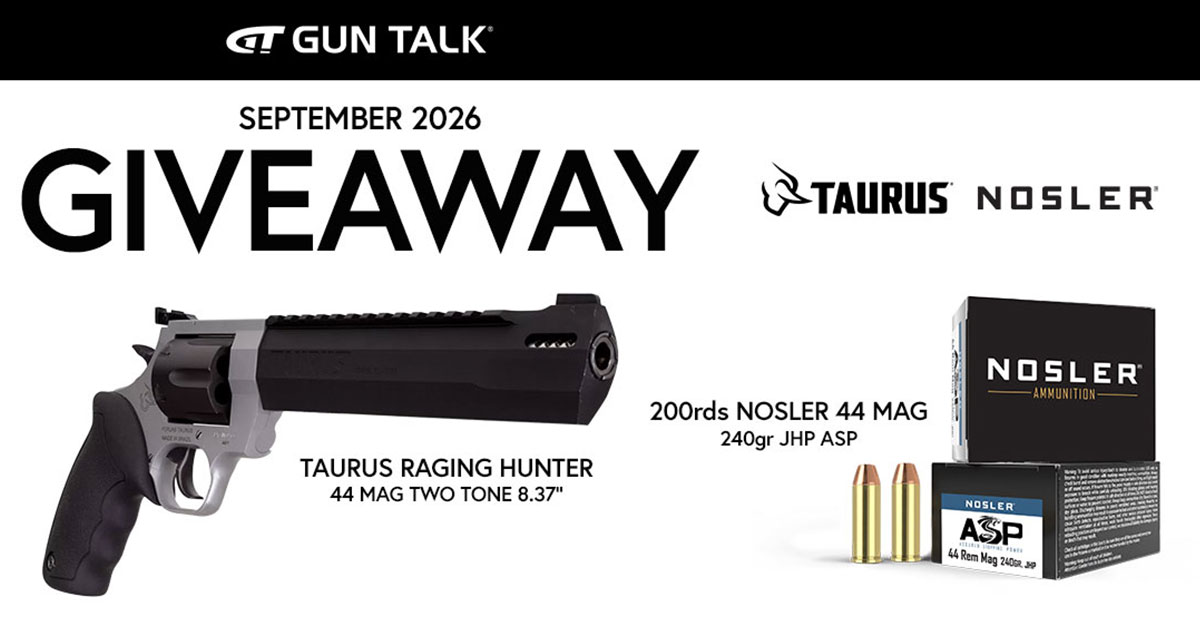
One lucky winner will bring home:
Open to U.S. residents 21+ only. Void where prohibited.