July 7, 2026
Gun Talk Staff
Most of the conversation in the self-defense firearms community centers on the gear. The caliber debate. The holster choice. The sights and the optic and the trigger weight. All of that matters. None of it matters as much as what happens inside your body the moment a genuine threat presents itself — because none of those gear choices mean anything if you freeze, shoot wild, or fail to process what’s happening fast enough to respond effectively.
The physiology of violent confrontation has been studied intensively by military researchers, law enforcement training specialists, and sports psychologists over the last 30 years. What that research consistently shows is both sobering and actionable: the untrained person’s body actively works against them in a life-threatening encounter, while the trained person’s body can be conditioned to work with them. The difference is not talent, courage, or resolve. It is repetition.
This piece covers the science of what happens to your body when violence arrives, why untrained responders fail in predictable and preventable ways, what training actually changes at the physiological level, and what that means for how every defensive firearms owner should approach their preparation.
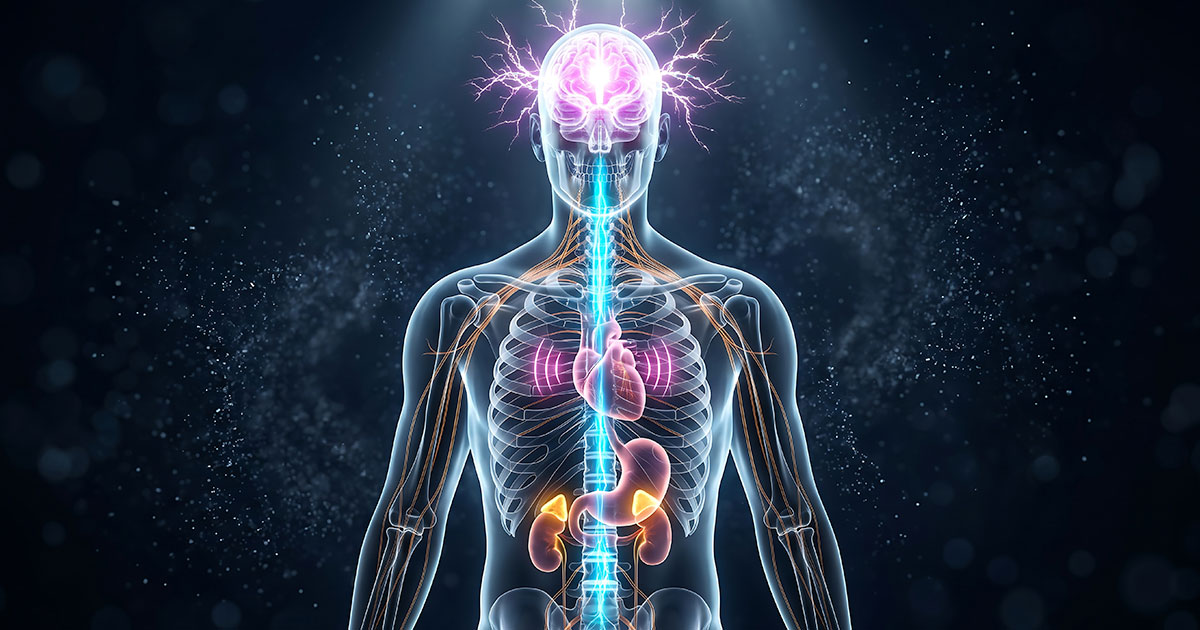
Before we get to the trained versus untrained comparison, it helps to understand the physiological sequence that begins the moment your brain registers a credible threat. This sequence — sometimes called the Threat Processing Sequence by defense neuroscientists — is not under your conscious control. It begins before you make a decision. It begins before you are fully aware of what is happening.
The amygdala is an almond-shaped structure deep in the brain’s temporal lobe. Its primary function is threat detection and emotional processing. It operates faster than the prefrontal cortex — the seat of rational decision-making, language, and fine motor planning. When the amygdala detects a stimulus it categorizes as threatening, it fires before conscious awareness catches up.
This matters enormously for defensive firearms use. By the time you consciously think “threat,” your amygdala has already triggered the hypothalamic-pituitary-adrenal (HPA) axis, initiating a hormonal cascade. The adrenal medulla begins secreting epinephrine (adrenaline) and norepinephrine. This process takes milliseconds. The downstream effects arrive in seconds.
Epinephrine and norepinephrine enter the bloodstream and produce a specific cluster of physiological changes that are extraordinarily well-documented. Every single one of them was evolutionarily designed to help you survive a predator attack in the Pleistocene. Most of them are active liabilities in a modern defensive firearms scenario.
Published research in self-defense training neuroscience, including a landmark peer-reviewed study measuring the responses of untrained, trained, and experienced combatants in simulated physical attack scenarios, reveals a consistent picture of untrained defensive response. The picture is not flattering, and it is not presented here to discourage firearm ownership. It is presented because understanding the problem is the first step toward solving it.
The freeze response — sometimes described as tonic immobility or a shutdown state — is not a character defect. It is a documented physiological response driven by the same amygdala-mediated threat processing system that produces fight and flight. Research from ScienceDirect (2023) measuring biochemical, physiological, and psychological markers of stress in simulated attack scenarios found that untrained individuals exhibited significantly stronger freezing reactions than trained individuals, particularly in high-intensity scenarios.
The freeze response exists because, in some predator-prey encounters, immobility is the optimal survival strategy. That evolutionary logic does not apply to a home invasion or a parking lot mugging. In those scenarios, freezing is the worst possible response — it eliminates the fight and flight options while doing nothing to neutralize the threat. Yet for the untrained person facing genuine violence, freeze is a common and physiologically understandable initial reaction that can last from fractions of a second to several critical seconds.
“Untrained individuals exhibit stronger freezing reactions, while highly skilled participants display the lowest propensity for freezing, especially in high-intensity scenarios.” — ScienceDirect, 2023, study of 60 subjects across untrained, trained, and experienced groups
At rest, your hands are capable of extraordinary precision — threading a needle, signing a signature, releasing a holster retention, operating a manual thumb safety. Under acute stress with heart rate elevated above 115 bpm, fine motor skills begin to degrade. Published HR threshold research (Grossman & Siddle; validated in ScienceDirect emergency medicine literature) shows that above 115 bpm, fine motor skills are compromised. Above 145 bpm, complex motor skills deteriorate. Above 175 bpm, cognitive processing falters severely.
For a defensive firearms scenario, this translates directly. Drawing from a holster, particularly one with active retention, involves fine motor sequences. Disengaging a manual safety involves a fine motor sequence. Running the slide to chamber a round if carrying without one — fine motor sequence. A defensive encounter that raises the heart rate to 175+ bpm can render all of those tasks significantly harder than they are at the range, on a calm Tuesday, with no stakes.
Perceptual narrowing under stress is one of the most consistently documented and practically dangerous phenomena in defensive firearms research. The brain, prioritizing the immediate threat, reduces processing of peripheral visual information. This produces several problems simultaneously. The defender may not see additional threats approaching from the side. They may not see innocent bystanders behind or adjacent to the primary threat. They may have difficulty acquiring their sights because their attention is magnetically locked on the threat rather than on the front sight or optic.
Law enforcement shooting incident reviews have documented cases where officers fired significantly more rounds than they consciously recalled, could not hear their own gunfire during the encounter, and could not account for their own movement during the event. These are not failures of memory. They are well-understood consequences of perceptual narrowing and auditory exclusion under acute sympathetic nervous system activation.
Military theorist John Boyd’s OODA Loop — Observe, Orient, Decide, Act — is one of the most useful frameworks for understanding why untrained response is slower than the math suggests it should be. Under normal conditions, an untrained person can complete the OODA loop. Under acute stress, with a flooded amygdala, narrowed visual field, degraded prefrontal processing, and a body experiencing hormonal overload for the first time, the loop slows dramatically. Orientation — the process of contextualizing what is being observed — is where untrained responders bog down most severely, because they have no prior reference for what is happening and no pre-programmed response to draw on.
Researcher Dave Grossman’s work in On Combat and related peer-reviewed literature established heart rate threshold zones for stress-induced performance degradation. These are psychologically-induced heart rate elevations, not aerobic exertion — a critical distinction. You can run sprints at 180 bpm and maintain cognitive function. Stress-induced elevations at the same bpm produce categorically different effects on performance.
| Zone / Condition | Heart Rate | Trained Response | Untrained Response |
|---|---|---|---|
| CONDITION YELLOW | 60–115 bpm | Alert, aware, processing normally. Ideal state for daily carry. Fine motor skills intact, decisions clear, reaction time normal. | Resting or mildly alert. Most people’s baseline. Unaware of emerging threats until the amygdala fires and the cascade begins. |
| CONDITION RED | 115–145 bpm | Optimal survival performance zone. Complex motor skills peak. Visual reaction time enhanced. Decision-making sharp. The body is working WITH you. | Fine motor skills begin to degrade. Drawing from a retention holster becomes noticeably harder. Manual safety manipulation unreliable. |
| CONDITION GRAY | 145–175 bpm | Performance begins declining. Trained gross motor skills (push-off, charge, basic strike) remain functional. Complex skill execution suffers. | Significant fine and complex motor degradation. Freeze response common. Tunnel vision pronounced. Auditory exclusion begins. Poor decision speed. |
| CONDITION BLACK | 175+ bpm | Severe performance degradation even for trained individuals. Only deeply ingrained gross motor skills remain accessible. Breathing control critical. | Severe cognitive impairment. Freeze or panic likely. Fine motor tasks essentially non-functional. Shooting wild or not shooting at all are common outcomes. |
The critical insight from this framework: the goal of self-defense training is not to prevent stress from occurring. That is neurologically impossible. The goal is to push the threshold at which performance degradation begins higher, build motor programs robust enough to function despite degradation, and develop pre-programmed responses that bypass the slowed OODA loop in the critical first seconds.
Here is the most important thing the research says, stated plainly: training works. Not any training, not just range time, not just trigger pulls on a square range with no stress — but structured, progressively stress-inoculated training produces measurable and documented improvements in defensive performance under genuine threat conditions.
Stress inoculation, as defined in On Combat and validated across subsequent military and law enforcement training literature, is the process of deliberately exposing a trainee to progressively more intense stress stimuli in a controlled environment. Successive exposure to controllable stressors produces specific neurological and physiological adaptations. The amygdala’s initial response to a threatening stimulus becomes more proportionate — less likely to immediately flood the system to a level that impairs function. The HPA axis learns, through repeated activation in safe contexts, to modulate the hormonal response more efficiently.
Special Forces research has documented that elite performers in high-stress environments typically maintain maximum heart rates of 175 bpm or lower during operations, compared to higher peaks among less trained individuals in equivalent situations. The difference is not physical conditioning — it is neurological calibration through repeated exposure.
The practical benefit of repetitive training in defensive firearms is the creation of deeply encoded motor programs — sequences of physical movement that become increasingly automatic through repetition. Neuroscience refers to this as procedural memory consolidation: the gradual transfer of a skill from the prefrontal cortex (slow, deliberate, conscious) to the basal ganglia (fast, automatic, subcortical).
When a motor program for the draw stroke is sufficiently encoded in the basal ganglia, it becomes accessible even when the prefrontal cortex is partially offline due to stress-induced impairment. This is why military and law enforcement training emphasizes repetition to the point of automaticity — not because the trainer wants a mindless robot, but because the research shows that skills available to conscious execution at normal heart rates may not be available under the hormonal conditions of a genuine threat unless they have been drilled below the level of conscious requirement.
“The enemy of performance under stress is novelty. The body performs what the nervous system has practiced. Everything else gets filtered out.” — Based on Grossman & Siddle, combat performance research
Trained individuals who have conducted force-on-force or scenario-based training have a critical advantage in the OODA Loop: they have pre-built Orientation templates for threatening scenarios. When the amygdala fires and the cascade begins, a trained individual’s brain can match the incoming sensory data to a pre-existing template — “this is a threat presenting at close range from the front” — and retrieve an associated pre-programmed response. This shortcircuits the slowest part of the loop and compresses reaction time dramatically.
This is why force-on-force training — Simunition, airsoft, or laser-based systems — is the most effective form of defensive training available and the form most consistently recommended by serious self-defense researchers. It creates the neural templates that allow effective response under real stress. Square range shooting with no time pressure, no movement, and no consequence for failure does not create those templates. It develops mechanical skill but not the stress-response architecture.
Every additional step between a resting state and a functional defensive posture is a step that stress may prevent you from completing. Manual thumb safeties require fine motor activation that may be unavailable at the moment you need the gun most. Multiple retention systems on a holster require sequential fine motor steps. Complex administrative procedures for chambering rounds under stress add cognitive load at the worst moment.
This is not an argument against any particular feature. It is an argument for training to such a level of automaticity that the features of your specific setup — whatever they are — become invisible to conscious execution. If you carry a pistol with a thumb safety, you must train the safety deactivation until it happens below the level of conscious thought. The research on stress-induced fine motor degradation does not argue against manual safeties. It argues against manual safeties that have not been trained to automaticity.
The most common and least useful form of defensive firearms training is the static, comfortable square range session. Shoot at a paper target. Take your time. No movement. No consequence for misses. This builds mechanical skill, which is valuable but incomplete. It does not build the stress inoculation or motor program automaticity that translates to performance when the heart rate hits 145 bpm in the parking garage.
Structured stress inoculation can be built into range sessions without force-on-force equipment. Timed drills with a shot timer create consequence. Reduced rest between strings builds elevated heart rate during performance. Moving while shooting creates kinesthetic complexity. Working from concealment, from awkward positions, and in low light creates novelty that the nervous system must adapt to. Every session with an elevated discomfort level is a deposit in the stress inoculation account.
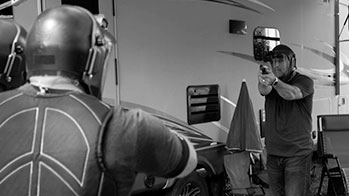
If you carry a firearm for personal defense and have never experienced even a simulated force-on-force scenario, you have a gap in your preparation that gear cannot fill. Force-on-force training — available through quality defensive training programs using Simunition, UTM, or laser-based systems — creates the one thing that static range training cannot: consequence. The stress response produced by a simulated attack by a training partner is not identical to the response produced by a real threat, but it is categorically closer than anything a paper target produces. It creates neural templates. It reveals gaps in motor programs. And it is the training environment most likely to produce the stress inoculation that makes the heart rate zone table above work in your favor.
Tactical breathing — also called combat breathing or box breathing — is one of the most evidence-supported interventions for modulating the acute stress response. The physiological mechanism is straightforward: deep, diaphragmatic breathing activates the parasympathetic nervous system, which partially counteracts the sympathetic activation driving the adrenaline cascade. Research on heart rate variability in stress conditions consistently shows that trained breathing practices can modulate heart rate and partially restore cognitive function even during acute stress.
The practical protocol used in military and law enforcement contexts: inhale for four counts, hold for four counts, exhale for four counts, hold for four counts. Repeated two to three times, this cycle has been documented to reduce heart rate and restore some prefrontal function even after a major stressor. Practiced regularly in low-stakes environments, it becomes a tool accessible under pressure.
One of the most devastating effects of acute stress on defensive decision-making is the suppression of abstract reasoning. Determining in the moment whether force is legally justified, whether deadly force is appropriate, and what the consequences of a particular action will be — all of these are prefrontal cortex functions that are partially offline when the amygdala is driving. The practical solution is to do that reasoning before the encounter.
Defensive firearms trainers and attorneys consistently recommend that carriers know their state’s use-of-force laws thoroughly before carrying. Internalize the standard for justifiable deadly force. Think through the scenarios most likely to present themselves given your lifestyle and environment. Build a pre-existing decision framework that the stressed brain can retrieve as a template rather than construct from scratch under fire. The USCCA and similar organizations offer specific training in this area that is as important as any range skill.
The firearm is the terminal tool in a defensive encounter. It is critically important, and choosing the right one and knowing how to operate it safely and accurately matters enormously. But research on the physiology of violent confrontation makes one thing clear: the gun does not perform under stress. The person carrying it does. And that person’s performance is determined not by their gear, their caliber, or their optic — but by the training that has or has not been deposited in their nervous system before the moment of need.
Untrained defensive response is characterized by freeze, fine motor failure, perceptual narrowing, slowed decision-making, and gross motor degradation under acute stress. These are not personal failures. They are the predictable outputs of a nervous system that has never experienced what it is experiencing.
Trained defensive response shifts those outcomes measurably. Stress inoculation raises the threshold at which performance degrades. Motor program automaticity preserves skill access under hormonal load. Pre-built OODA templates compress reaction time. And the practices — breathing, simplification, scenario-based training, legal framework internalization — are all learnable, all accessible, and all more important than the next gear upgrade.
Train like your life depends on it. Because it might.
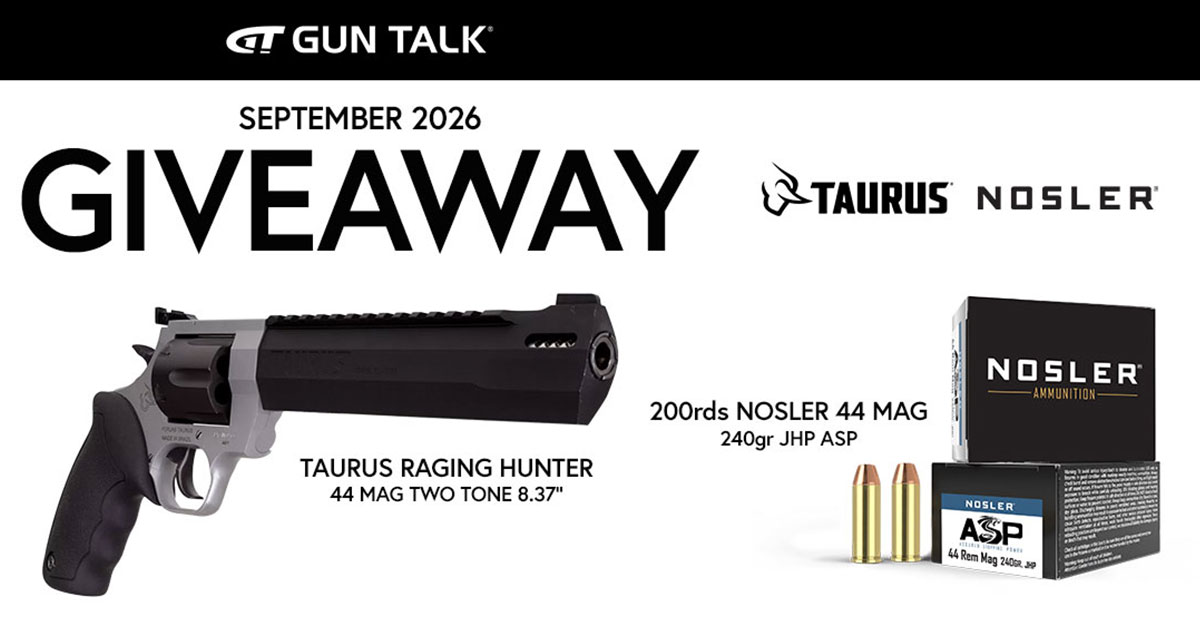
Gun Talk Giveaway
One lucky winner will bring home:
Open to U.S. residents 21+ only. Void where prohibited.