August 13, 2026
Gun Talk Staff
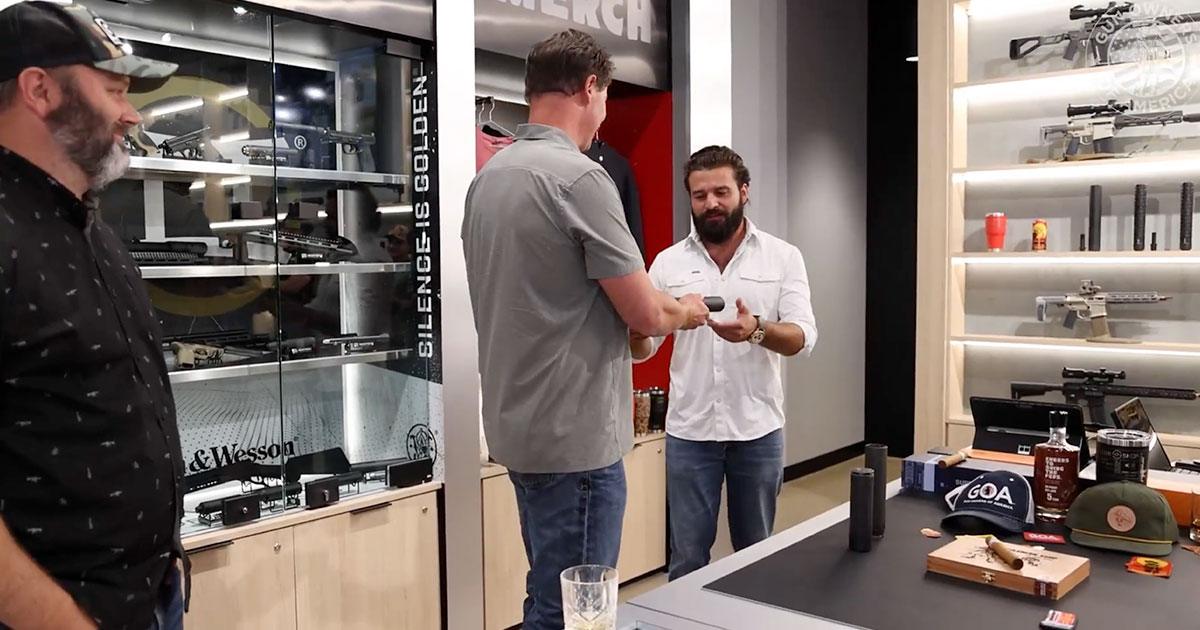
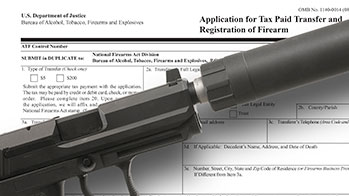
GOA members Brandon Herrera (Republican nominee, Texas Congressional District 23) and Wes Virdell (Texas State Representative, House District 53) completed suppressor purchases from Silencer Shop without filing a Form 4, without ATF approval, and without registration in the National Firearms Registration and Transfer Record. GOA Senior Vice President Erich Pratt and Congressman Andrew Clyde (R-GA) were present at the transfer. Video of the transaction was posted publicly. The DOJ missed its 5:00 p.m. Eastern deadline to object and did not seek a Fifth Circuit stay. The seven-day stay lapsed. The permanent injunction took effect. These were the first unregistered suppressor transfers to take place lawfully in the United States since the National Firearms Act was signed in 1934 — 92 years ago.
We published the full legal breakdown yesterday. We explained the constitutional theory, the covered parties, the stay, and the three possible scenarios. Scenario 1 was: the stay expires without Fifth Circuit extension and the injunction takes effect. That is what happened.
The Department of Justice had a 5:00 p.m. Eastern deadline on August 12 to notify GOA in writing that it considered the planned transfers unlawful or intended to enforce the enjoined NFA provisions. It did not respond. It did not seek a Fifth Circuit emergency stay. At 11:59 p.m., GOA noted that the deadline had passed with no government response. At 12:01 a.m. Central Time on August 13, Silencer Shop transferred a suppressor to Brandon Herrera and a second to Wes Virdell. Congressman Andrew Clyde, the author of the NFA tax language in the One Big Beautiful Bill Act, was in the room to witness it.
The 92-year-old federal registration requirement for suppressors, in that moment and for covered parties, ceased to be enforceable. Not through legislation. Not through executive action. Through a court order, a missed government deadline, and two Texans who were in the right place at the right time with the right organizational memberships.
This is the question that every Second Amendment observer is asking this morning. The DOJ knew the deadline. It knew what GOA and Silencer Shop were planning — the notice letter was public. It had options: seek an emergency Fifth Circuit stay, file a notice of appeal with the district court, or respond to GOA’s letter asserting it would continue enforcement. It did none of these things before the deadline passed.
The most credible explanation, based on reporting from The Reload and AmmoLand: the DOJ is internally divided on whether to appeal at all. The constitutional theory Judge Hendrix applied — that the NFA registration requirements cannot survive after Congress eliminated the underlying taxes — is not easy to argue against in the current legal and political environment. An appeal risks creating binding Fifth Circuit precedent that could accelerate the dismantling of NFA registration across the circuit. Not appealing allows the district court injunction to stand while the administration figures out whether there is a viable path forward.
There is also the political dimension. The current administration eliminated the NFA tax in the One Big Beautiful Bill Act. Congressman Clyde authored that language. Both Brandon Herrera and Wes Virdell are endorsed by the President. The DOJ defending the NFA registration regime against its own administration’s legislative accomplishment, against constituents of its own political coalition, in a case where the legal ground is thin, is not a politically comfortable position.
The silence may be strategic. It may be bureaucratic inertia. It may be that DOJ lawyers simply ran out of time to coordinate a response over the August 12 deadline. Whatever the reason: the clock ran out, the transfers happened, and the government did not stop them.
The choice of Herrera and Virdell as the first recipients of injunction-covered transfers was not accidental. Both men are GOA members, placing them within the court’s injunction as covered parties. Both are Texas residents, keeping the transaction within the Fifth Circuit’s jurisdiction. Both have public Second Amendment profiles that make the transfer politically communicative rather than legally adventurous.
Herrera — known online as @TheAKGuy — is one of the most-followed firearms content creators in the country, with millions of YouTube subscribers built on a combination of AK-pattern rifle content and a sharp sense of humor. He is the Republican nominee for Texas’s 23rd Congressional District, running to represent a large district in West Texas and San Antonio. His endorsement by the President and his profile in the firearms community make him an effective public face for an action that GOA wants to be seen as historic rather than provocative.
Herrera’s own public statement captured the moment cleanly: “Time to push the envelope.”
Virdell is the Texas state representative for House District 53, covering the Hill Country west of Austin. He holds a current Texas License to Carry and is an active Second Amendment advocate at the state legislative level. His participation reinforces the political legitimacy of the transfers — an elected official, an LTC holder, purchasing through legal channels in compliance with a federal court order.
GOA noted in its formal notice letter that both men are covered “twice over”: as GOA members through the organizational plaintiff coverage, and as Silencer Shop customers through the commercial plaintiff coverage. They are the cleanest possible test cases for the injunction.
This matters for every GOA member and Silencer Shop customer who is now wondering what their own covered transfer will look like. Based on Silencer Shop’s published guidance and the structure of the injunction:
The Gun Control Act still applies. The suppressor is still a commercial transfer through an FFL. The background check still happens. What is gone — for covered parties, while the injunction stands — is the registration and pre-approval layer that has sat on top of every NFA item transfer since 1934.
The significance of what happened at 12:01 a.m. is real. So is the need to be precise about what remains unchanged.
The injunction covers suppressors, SBRs, SBSs, and AOWs — the categories Congress zeroed the tax on. Machine guns and destructive devices kept their $200 tax. The NFA’s registration requirements for machine guns are fully intact. Last night’s transfers have zero bearing on machine gun regulations.
If you are not a GOA member, a Silencer Shop customer, or a customer of the other named commercial plaintiffs — Palmetto State Armory, SilencerCo, B&T, Hot Shots — the Form 4 process applies to you in full. The injunction is party-specific. The fact that Herrera and Virdell bought suppressors without a Form 4 does not mean you can. If you are not a covered party and you attempt to acquire a suppressor without NFA compliance, you are committing a federal felony.
California, Delaware, Hawaii, Illinois, Massachusetts, New Jersey, New York, Rhode Island, and Washington D.C. all independently ban suppressors under state law. The federal injunction does not preempt or enjoin state enforcement. A GOA member in California cannot buy a suppressor based on this injunction. State law still applies.
The government’s failure to stop the 12:01 a.m. transfers does not end the litigation. DOJ can still appeal to the Fifth Circuit. The Fifth Circuit can still grant a stay that suspends the injunction pending appeal. If that happens, covered transfers would again require the full NFA process. The current situation — injunction in effect, no appellate stay — is the state of the law as of this morning. It may not be the state of the law next week.
There is a version of Second Amendment history that has a before and an after. Before Heller: no individual right recognized by SCOTUS. Before Bruen: no meaningful standard limiting how states could restrict that right. And now, this morning: before and after the first time since 1934 that Americans lawfully acquired suppressors without federal registration.
That’s not rhetorical. The 92-year-old NFA registration regime for suppressors was, until last night, a continuous and unbroken feature of American firearms law. Every suppressor transfer since 1934 — millions of them — went through the federal registry. Last night’s transfers did not. If the injunction holds through the appellate process, or if Congress acts to codify the ruling, or if the DOJ declines to appeal and instead applies the holding administratively, those 12:01 a.m. transfers will be the moment the historians mark.
The gun rights organizations that have been litigating this question for years understand the significance. Silencer Shop Foundation, GOA, and their co-plaintiffs did not put Herrera and Virdell in that room at midnight for the legal effect alone. They did it because they wanted the image: the AK Guy and a Texas state rep, GOA membership cards in hand, walking out of a gun store in Texas with suppressors the federal government had not registered. That image is doing work right now across every platform where Second Amendment supporters gather.
The work is not done. The Fifth Circuit will weigh in. Congress may act. Other circuits will see parallel cases. The Supreme Court may eventually settle the question nationally. But what started as a constitutional theory filed in an East Texas federal court on August 1, 2025 became, twelve months later, a midnight transaction at a gun store in Leander, Texas that ended 92 years of unbroken federal suppressor registration. That’s the story.
The immediate question is whether DOJ files an appeal and seeks an emergency Fifth Circuit stay. If it does, the Fifth Circuit would have to decide quickly whether to reimpose the NFA process while the appeal is briefed and argued. The factors courts weigh for stays pending appeal — likelihood of success on the merits, irreparable harm, balance of equities, public interest — are the same four factors New Jersey is currently navigating in its SCOTUS stay application for the assault weapons ban ruling.
The concurrent cases in the Eastern District of Missouri (Brown v. ATF) and Eastern District of Kentucky (Roberts v. ATF) raise the same constitutional theory. If those courts rule the same way as Judge Hendrix, the argument for Supreme Court review of the constitutional question becomes much stronger. If the Fifth Circuit affirms, the circuit split question changes entirely.
Congressman Clyde and the 47-member congressional coalition are still pressing DOJ to apply the ruling nationwide through administrative action. If the administration directs the ATF to implement the holding as its operating position — without a new rule and without waiting for the Fifth Circuit — the injunction’s practical reach expands dramatically.
Gun Talk Media will cover every development as it moves. Subscribe to our newsletter, follow us on Shooting Sports Life, and check GunTalk.com for updates as the Fifth Circuit, the DOJ, and Congress each respond to what happened in Leander, Texas at 12:01 a.m.
| July 4, 2025 | One Big Beautiful Bill Act signed. NFA taxes on suppressors, SBRs, SBSs, and AOWs to drop to $0 effective January 1, 2026. |
|---|---|
| August 1, 2025 | Silencer Shop Foundation, GOA, PSA, SilencerCo, B&T, 15 states, and individual plaintiffs file suit in N.D. Texas. |
| January 1, 2026 | NFA taxes drop to $0. Registration apparatus remains fully in place. |
| August 5, 2026 | Judge Hendrix grants summary judgment. 66-page opinion. Permanent injunction entered. Seven-day stay to allow appellate relief. |
| August 5, 2026 | GOA issues Notice of Intent. Silencer Shop updates ssf.org with live case status. |
| August 12, 2026 | GOA and Silencer Shop formally notify AG Blanche and ATF Director Cekada of planned 12:01 a.m. transfers to Herrera and Virdell. 5:00 p.m. ET deadline for DOJ to object. |
| August 12, 5pm ET | DOJ deadline passes with no response. No Fifth Circuit stay sought. Injunction set to take effect. |
| August 13, 12:01am | Brandon Herrera and Wes Virdell complete first unregistered suppressor transfers since 1934 at Silencer Shop, Leander, Texas. GOA SVP Erich Pratt and Cong. Andrew Clyde present. Video posted publicly. |
| Pending | DOJ decision on whether to appeal and seek Fifth Circuit stay. Brown v. ATF (E.D. Mo.) and Roberts v. ATF (E.D. Ky.) still pending. |
| Pending | Congressional push for DOJ to apply ruling nationwide administratively. |
Photos courtesy of @SilencerShop, @GunOwners, @TheAKGuy, and @wesvirdelltx.
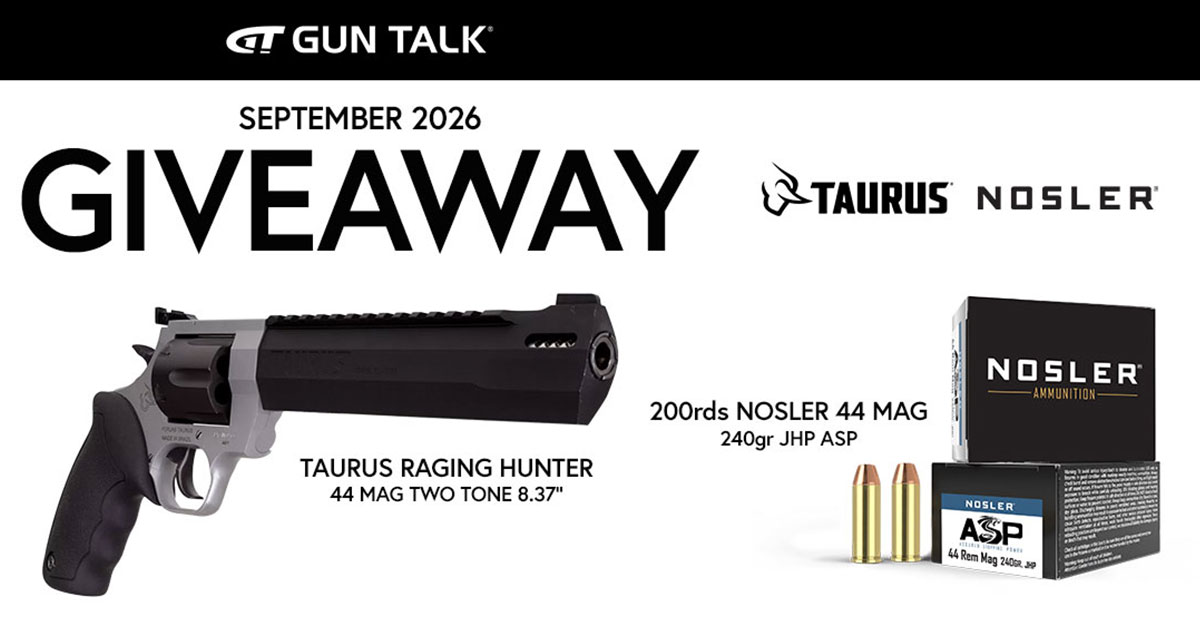
Gun Talk Giveaway
One lucky winner will bring home:
Open to U.S. residents 21+ only. Void where prohibited.