Gun Talk November Giveaway
Two winners this month.
- CZ Duty F4.0Manual safety
- Black Hills MK262 MOD 1-C460 rounds, 77gr 5.56mm
Two winners. Must be 21+ to enter. Void where restricted.
Gun Talk November Giveaway
Two winners. Must be 21+ to enter. Void where restricted.
November 10, 2026
Gun Talk Staff
Gun Talk Media Staff — November 12, 2026
The Supreme Court will hear oral argument Wednesday, December 2, 2026, in two consolidated Second Amendment cases. Viramontes v. Cook County challenges Cook County, Illinois' assault weapons ordinance, which covers the AR-15. Grant v. Higgins challenges Connecticut's assault weapons law, which was expanded in 2013 after the Sandy Hook shooting. The Court agreed to take both cases on June 30. Lower courts upheld both laws, and the challengers say those rulings can't be squared with District of Columbia v. Heller (2008) and New York State Rifle & Pistol Association v. Bruen (2022).
| Viramontes (No. 25-238) | Challenges Cook County, Illinois' assault weapons ordinance, including its restrictions on AR-15 platform rifles (from the Seventh Circuit) |
|---|---|
| Grant (No. 25-566) | Challenges Connecticut's assault weapons law, expanded after Sandy Hook (from the Second Circuit) |
| Argument | Wednesday, December 2, 2026 |
| Federal government | Supports the challengers. Solicitor General D. John Sauer filed an amicus brief arguing the bans violate the Second Amendment |
| Decision | Expected by the end of the term, June 2027 |
Two weeks before the argument, the Cook County half of the case hit a snag. On October 29, petitioner Cutberto Viramontes, through his lawyers at Cooper & Kirk, filed a one-paragraph motion under Supreme Court Rule 46.2 asking to be dismissed from the case. The motion gave no reason.
Cook County then filed a suggestion of mootness. It argues that without Viramontes, none of the remaining petitioners can show the standing the Constitution requires. The remaining petitioners are Christopher Khaya and two membership groups, the Firearms Policy Coalition and the Second Amendment Foundation. The county says Khaya wants an IMI Galil, which it describes as an AK-pattern rifle rather than an AR-15 style rifle, and that the groups identified only two Cook County members, Viramontes and Khaya. It asks the Court to dismiss Viramontes as moot or as improvidently granted.
“It is doubtful that any petitioner has Article III standing.” — Cook County, suggestion of mootness filed in Viramontes v. Cook County
Even Cook County acknowledges that Grant is consolidated with the case, so the Court could still reach the AR-15 question through Connecticut's law. As of this writing the Court has not ruled on either request, and the December 2 argument remains on the calendar. The challengers' lawyers had not publicly responded to the mootness filing at the time of this report.
This is the first time the Supreme Court will hear the merits of an AR-15 ban. In June 2025 it declined to take up a Maryland case, Snope v. Brown, but Justice Brett Kavanaugh wrote that the Court “should and presumably will address the AR-15 issue soon, in the next Term or two.” That time has come.
Bruen set the test: if the Second Amendment's text covers the conduct, the government must show a historical tradition of similar regulation. Heller said the amendment protects arms “in common use” for lawful purposes and does not reach “dangerous and unusual” weapons. The central question is how the Court defines common use: by how many rifles Americans own, or by what they're used for. If it is ownership, the numbers are on the challengers' side. The 2026 National Firearms Survey by Georgetown professor William English, which Gun Talk covered earlier this fall, estimates roughly 40 million AR-15 type rifles in private hands.
Cook County, Connecticut, and their supporters argue that AR-15 style rifles are military-style weapons built for combat and unsuited to civilian ownership. That framing helped them in the lower courts. Challengers answer that the framing misses the Bruen question. A firearm doesn't lose protection because it looks military; the issue is whether it's in common use for lawful purposes, and tens of millions of owners use these rifles for home defense, sport, and hunting.
The federal government's brief makes the same point. According to the brief, AR-15s are “Arms” covered by the amendment's text and are in common use among law-abiding citizens, and it rejects lower-court reasoning based on the rifle's military character, its dangerousness, and its usefulness for self-defense.
Solicitor General D. John Sauer filed the United States' brief in support of the challengers in both cases. It argues that Cook County's and Connecticut's bans violate the Second Amendment. The brief is filed as an amicus, so the United States is not a party, but it is unusual for the federal government to take a side so clearly in a challenge to state and local gun laws. Press reports say the Solicitor General's office has also asked for time to take part in the oral argument. Gun Talk Media has not confirmed whether the Court has allowed that.
A decision for the challengers would bear directly on similar laws in states such as California, Maryland, Massachusetts, New York, and New Jersey. A decision for the defending jurisdictions would be the Court's first endorsement of an AR-15 ban in the Bruen era. The ruling will not directly decide suppressors, braces, or other regulated items, but its reasoning will shape how lower courts treat every Second Amendment challenge.
| If the Court rules for the challengers | If the Court rules for the defending jurisdictions |
|---|---|
| The Connecticut ban (and Cook County's, if that case proceeds) is invalidated | The bans are upheld, the Court's first endorsement of AR-15 restrictions since Bruen |
| The reasoning bears on similar laws in other states | States keep authority to restrict AR-15 platform rifles |
| Pending challenges proceed under a more favorable standard | Pending challenges face a higher bar |
| “Common use” turns largely on how widely owned the arm is | “Common use” is defined more narrowly, or military-style features count against protection |
By Gun Talk's count, 2026 has been the most productive year for Second Amendment litigation since Heller. Key developments:
Viramontes and Grant are the capstone. The question now is how broadly the Court writes: a narrow ruling on these two laws, or a broad statement on semiautomatic rifles that settles the question for the states that still have bans.


Gun Talk Giveaway
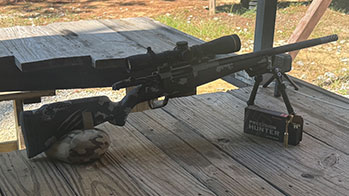
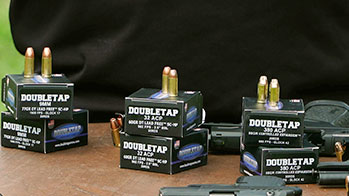
One lucky winner will bring home:
Open to U.S. residents 21+ only. Void where prohibited.