July 2, 2026
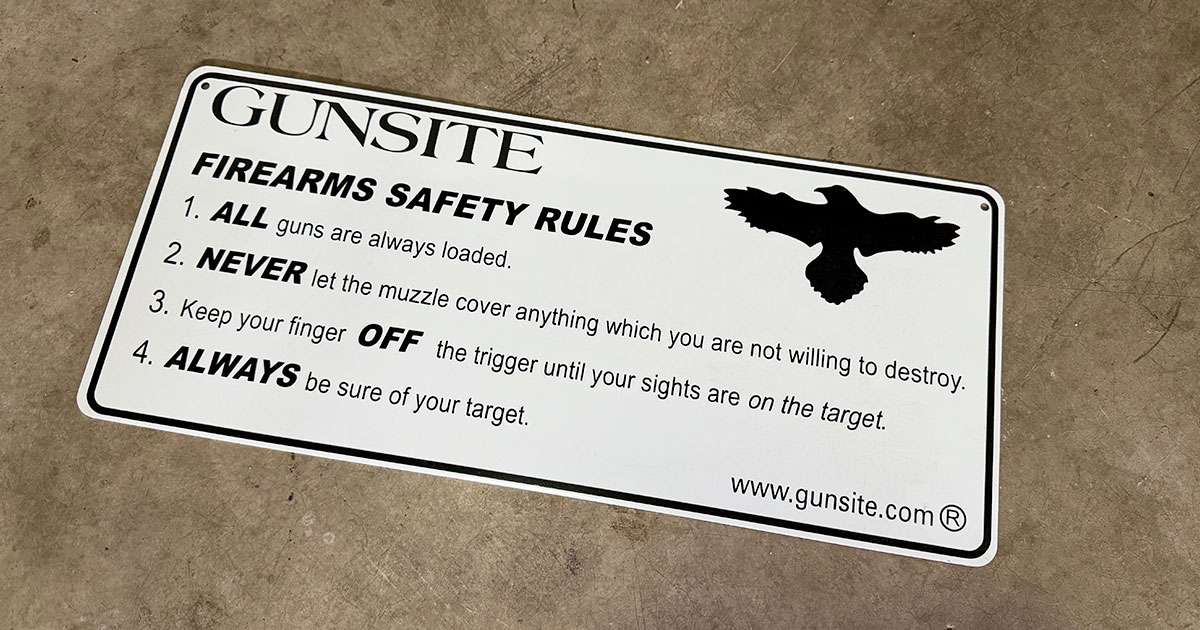
Every year, thousands of Americans are injured in unintentional firearm incidents. The overwhelming majority of those incidents share a common thread: at least one of four fundamental safety rules was violated. Not forgotten — violated. The rules were known. The training had happened. And somewhere between knowing the rules and handling the firearm, someone stopped applying them.
That is the central challenge of firearms safety education. The four rules are not complicated. They are not hard to understand. Teaching them takes about five minutes. What takes a lifetime of practice is building the habits, the muscle memory, and the mindset that makes these rules automatic — so deeply ingrained that they operate even under stress, even when tired, even when distracted, even when the gun is “unloaded.”
This piece is for the first-time gun owner who needs to learn them from scratch, the experienced shooter who benefits from revisiting the fundamentals, and the parent, instructor, or range safety officer who needs a clear, well-sourced reference to share with others. The four rules of gun safety are the most important thing anyone who touches a firearm will ever read. Treat them that way.
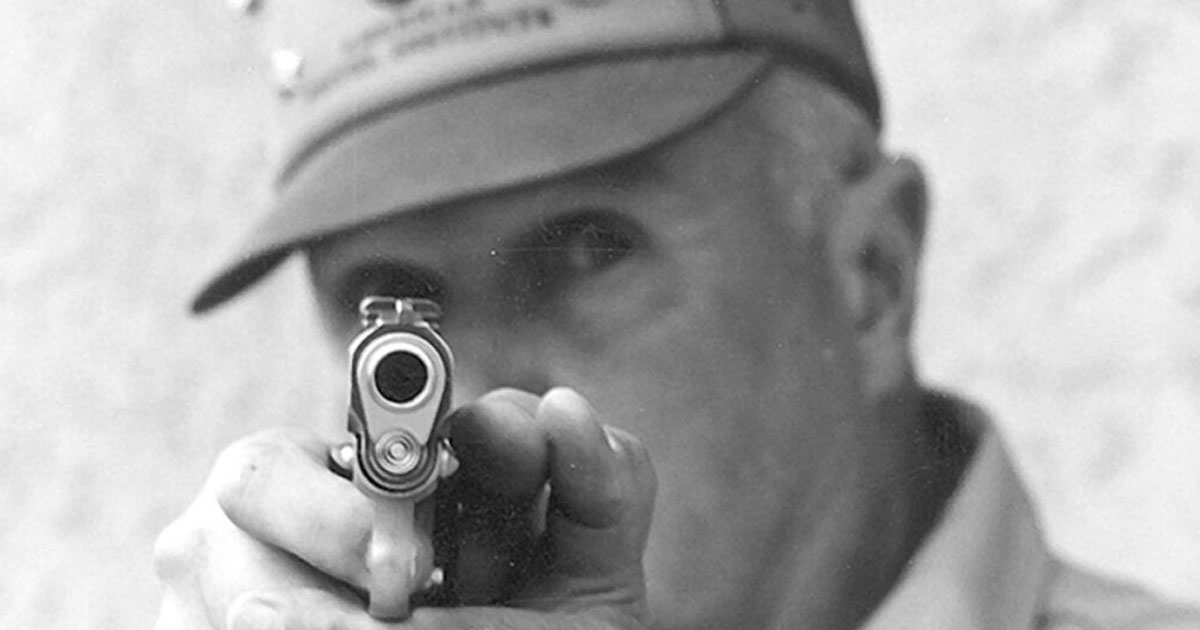
Lt. Col. Jeff Cooper was a U.S. Marine Corps officer, combat veteran of World War II and Korea, historian, writer, and one of the most consequential figures in the history of American firearms training. He earned a master’s degree after his military service, taught high school and community college history, and eventually combined his teaching gift with his deep knowledge of firearms to found the American Pistol Institute in 1976 — a facility in northern Arizona that would later become the legendary Gunsite Academy. A detailed profile of Cooper’s life and career from NRA American Rifleman lays out just how singular his influence on modern pistol craft was.
Before Cooper, firearms safety was governed by a sprawling collection of rules that varied by organization, by firearm type, and by application. The NRA’s “Ten Commandments of Firearms Safety” was widely taught but difficult to memorize, especially for new shooters. Range-specific rules applied on the range but not in the home. Hunting rules applied in the field but not to defensive carry. There was no single, universal framework that applied to every firearm in every situation. A thorough history of how the four rules came together traces this fragmented landscape in more depth.
Cooper changed that. Drawing on his military training and decades of practical shooting and instruction, he distilled all existing safety guidance into four rules that apply to every firearm, at all times, in every context — on the range, in the home, in the field, and everywhere else. By 1976, when Gunsite opened, the Four Rules were displayed prominently. By 1978, they were the cornerstone of the curriculum. In the five decades since, they have been adopted by virtually every serious firearms training institution in the United States and beyond — a legacy that Gunsite Academy continues to teach to this day at the same Paulden, Arizona campus where Cooper first formalized them.
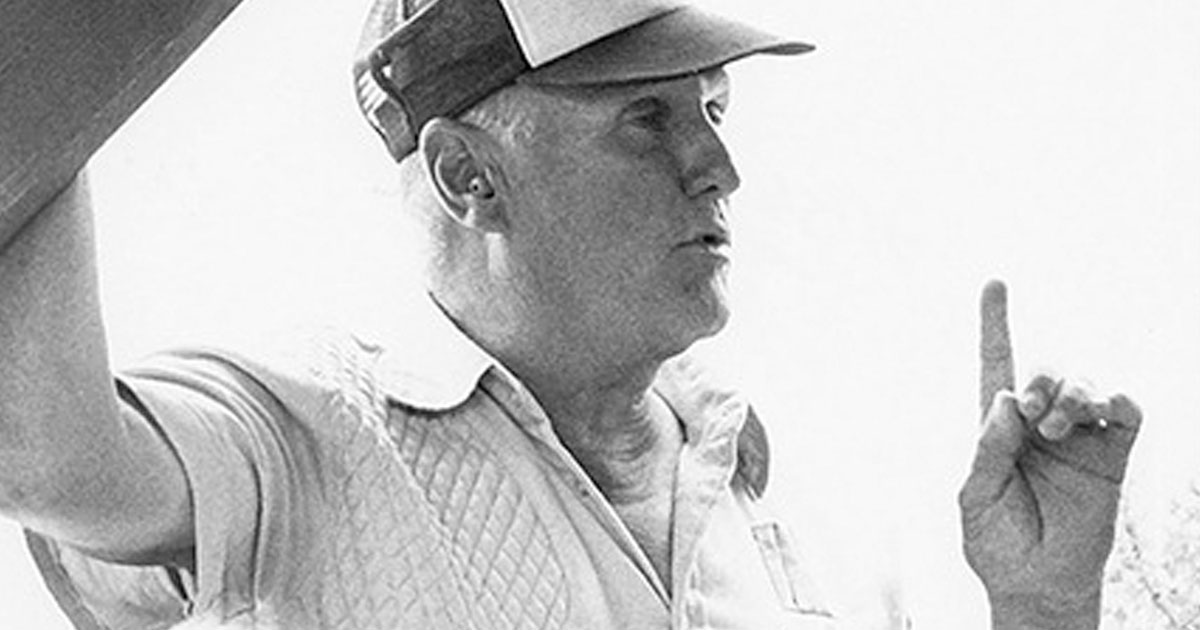
“Safety is something that happens between your ears, not something you hold in your hands.” — Lt. Col. Jeff Cooper
The most important design principle in Cooper’s four rules is one that often goes unspoken: they are deliberately redundant. Each rule, followed in isolation, prevents a negligent discharge. But Cooper understood that people make mistakes — that attention lapses, that habits break down under stress, that even trained shooters have momentary failures of discipline. So he designed the rules to function as layers of protection, not a single barrier. GUNSweek’s breakdown of the rules frames this layered design well for shooters encountering it for the first time.
If Rule 1 fails — if someone forgets the gun might be loaded — Rule 2 catches it. If the muzzle is inadvertently pointed at something it shouldn’t be but the finger is off the trigger, no discharge occurs. If Rule 2 and Rule 3 both fail — if the muzzle is covering something it shouldn’t and the finger has drifted to the trigger — Rule 4 still requires that the shooter verify the target before firing. A negligent discharge that injures someone requires the simultaneous failure of multiple rules. That is the architecture’s genius: it builds safety in depth, not in a single point of failure.
This rule is not a statement of physical fact. Every experienced shooter knows that a gun with an empty chamber and no magazine is not going to fire. The rule is a statement of mindset — an instruction to permanently eliminate the category of “unloaded gun” from your thinking.
When you treat every firearm as if it is loaded, you apply all subsequent safety rules automatically. You don’t muzzle sweep your friend because “the gun’s not loaded.” You don’t put your finger on the trigger because “I know it’s clear.” You don’t point it at the ceiling while you’re checking it because “I just unloaded it.” The moment you create an exception — the moment you allow yourself to treat a gun as “definitely unloaded” — you have introduced a gap through which accidents enter.
The only permitted exception, in Cooper’s own words, is when the gun is in your hands and you have personally verified it is unloaded for a specific purpose such as cleaning. The moment you set it down, Rule 1 applies again.
Rule 1 violations almost always follow from someone else saying “don’t worry, it’s not loaded.” The correct response to that statement is not reassurance — it is to verify personally. Every time. No matter who said it. No matter how certain they seem. The rule does not trust the confidence of others. It requires personal verification, and even after verification, it requires maintaining the loaded-gun mindset. Cooper’s own carry-condition framework — still referenced today in explanations of his condition codes for carrying a 1911 — grew directly out of this same insistence on precise, unambiguous states rather than vague reassurance.
“If someone hands you a firearm and says, ‘Don’t worry, it’s not loaded,’ you do not dare believe them.” — Jeff Cooper
The muzzle is the business end of the firearm — the point from which a projectile exits at potentially lethal velocity. Rule 2 requires that you maintain constant awareness of where that muzzle is pointed, every second you are handling the firearm. Not just when you’re about to shoot. Not just when the gun is loaded. Always.
“Cover” means to point at, sweep across, or allow the muzzle to traverse. If the muzzle crosses your hand while you’re holstering, that’s a Rule 2 violation. If you set the firearm on a table pointed at the wall where someone could be sitting on the other side, that’s a Rule 2 violation. If you pick up a gun and, in the process of doing so, allow the muzzle to sweep past your own body, that’s a Rule 2 violation. The rule is absolute and continuous.
The phrase “not willing to destroy” is deliberate. Not “willing to damage” — destroy. Cooper chose this word to force shooters to think about consequences at the highest level. Every muzzle direction decision should involve a conscious acknowledgment of what would happen if the gun fired at that moment. If you’re not fully prepared to accept that outcome, the muzzle shouldn’t be pointing there.
On a range, the safe direction is typically downrange. At home, identify a safe direction in each room — usually toward a solid exterior wall or the floor at a downward angle, never toward an occupied adjacent room. During administrative handling (loading, unloading, cleaning), always establish a safe direction first, then maintain it throughout the task. When holstering, take your time — the muzzle sweeping your own body is the most common Rule 2 violation in concealed carry, a point ITS Tactical’s look at Cooper’s carry conditions and safety principles reinforces for anyone carrying daily.
Rule 3 is, as Cooper himself noted, the most frequently violated of the four rules. It is also, given that Rules 1 and 2 are properly maintained, the rule whose violation is most likely to cause a negligent discharge — because a violation of Rule 3 combined with any other surprise or stressor can produce an unintended shot. A close examination of the four rules from Cornered Cat digs further into exactly why this specific rule fails more often than the others.
The finger belongs outside the trigger guard, indexed straight along the frame, until two conditions are simultaneously true: the sights are on the target, and the shooter has made a conscious decision to fire. Not when you’re drawing. Not when you’re acquiring the target visually. Not when you’re “pretty sure” you’re about to shoot. The finger moves to the trigger when the decision to fire has been made. Until that precise moment, it stays indexed on the frame.
The reason is physiology as much as training. The human hand tends to operate as a unit — when the other fingers grip tightly, as during a flinch, a stumble, or a startle response, the trigger finger tends to sympathetically follow. If the finger is in the trigger guard during one of those events, an unintended discharge can occur even without a conscious intention to fire. Keeping the finger indexed on the frame eliminates that possibility entirely.
The correct trigger discipline position is not a bent finger hovering above the trigger guard — it is a straight finger, touching the frame of the firearm at or above the trigger guard, pointing forward along the slide or receiver. This position is physically incompatible with firing the gun. Train this position until it is unconscious and automatic.
Rule 4 is the last line of defense — the rule that applies at the moment of firing and governs the consequences of the shot. A bullet does not stop at the intended target. It continues until it encounters sufficient resistance to stop it, which may be the target, the backstop behind the target, the wall behind the backstop, or something beyond. Every shot that leaves a barrel is the shooter’s legal, moral, and ethical responsibility from the moment of firing until it comes to rest. Delta Red Tactical’s rundown of the four rules puts particular emphasis on this final-responsibility framing.
“Be sure of your target” means positively identify what you are shooting at before firing. This sounds elementary and is regularly violated. Animals at dusk that might be deer or might be people. Sounds in the house that might be a burglar or might be a family member. Movement in brush that might be game or might be another hunter. Rule 4 demands identification before the trigger is pulled — not assumption, not probability assessment, but positive identification.
“What is beyond it” means understanding the full trajectory of the bullet after it passes through or past the target. On a range, this means knowing the berms contain your rounds. In the field, this means knowing what lies beyond the animal. In a defensive scenario, this means knowing who is behind the threat — the hardest application of Rule 4 and the one most relevant to concealed carriers and home defenders.
Rule 4 has specific and critical implications for home defenders. Handgun rounds — even hollow points designed for controlled expansion — can penetrate interior walls. A home defender who fires at a perceived threat must have identified that threat with certainty AND must be aware of who else is in the home and where they are. This is why home defense plans should include establishing the locations of family members before a defensive encounter develops. It is why many home defense instructors recommend establishing a safe room and having family members come to the defender rather than the defender searching a dark house. Rule 4 is not suspended in a defensive encounter. It is the hardest to follow in exactly that moment, which is why it must be trained and planned for in advance.
| Rule 1 fails (forgot gun might be loaded) | Rule 2 catches it — muzzle pointed safely means no injury even if a round fires. Rule 3 catches it — finger off trigger means no unintended discharge occurs. |
|---|---|
| Rule 2 fails (muzzle covers something unsafe) | Rule 3 catches it — finger off trigger means the muzzle covering something does not result in a discharge. Rule 1 reinforces — if gun is always treated as loaded, the risk of the muzzle covering something is felt acutely. |
| Rule 3 fails (finger enters trigger guard early) | Rule 2 catches it — if muzzle is pointed safely, an unintended discharge causes no injury. Rule 1 reinforces — loaded-gun mindset makes Rule 3 failure feel more consequential, creating self-correction. |
| Rule 4 fails (fires without verifying target) | Rules 1, 2, and 3 cannot retroactively prevent this — Rule 4 is the final check and must hold. Once the trigger is pulled, the bullet’s consequences are the shooter’s responsibility permanently. |
| ALL FOUR maintained simultaneously | A negligent injury is mechanically impossible. The rules, followed completely and simultaneously, eliminate the possibility of unintended harm. |
If you are new to firearms ownership, everything in the shooting world — the calibers, the optics, the holsters, the techniques, the competitions, the gear — is secondary to these four rules. All of it. You can learn the equipment over time. You can develop skills incrementally. But the four rules must be internalized before the first round is ever fired, and they must be maintained without exception for every round that follows for the rest of your life.
The good news: they are not difficult to learn. They are difficult to maintain automatically under all conditions, which is why training matters and why repetition matters and why instructors exist. Take a quality firearms safety course from a certified instructor before handling your firearm unsupervised. Seek training from credentialed organizations such as the NRA, USCCA, or a Gunsite-certified instructor — the same institution where Cooper first taught these rules remains one of the most respected training destinations in the country, running everything from foundational pistol courses to advanced rifle and defensive shooting curricula built on this exact framework. Build the habits before the habits are needed.
The even better news: the firearms community overwhelmingly wants you to succeed at this. Range officers, experienced shooters, and instructors are almost universally willing to teach these rules patiently to new shooters. The culture of safety in the responsible gun community is strong. Lean on it. Ask questions. Take the training — whether that’s a weekend class at your local range or a dedicated trip to Gunsite Academy itself. Learn the rules.
“There are no accidents with firearms. There are only negligent discharges — and every one of them involves the violation of at least one of the four rules.”
Lt. Col. Jeff Cooper created these rules nearly 50 years ago, and they have not been meaningfully improved upon because they do not need to be. They are complete. They are universal. They apply to every firearm in every context without modification or exception. They have been adopted by the military, law enforcement, civilian training institutions, and competitive shooting organizations worldwide for the simple reason that they work — a durability that The Armory Life examined directly in asking whether Cooper’s rules still hold up nearly five decades later. They do.
Every responsible gun owner — new or experienced, hunter or competitor, concealed carrier or home defender — should be able to recite these four rules from memory, explain the reason behind each one, and demonstrate them automatically through habit. Not most of the time. Not usually. Every time, without exception, for the rest of their lives.
These rules are why the overwhelming majority of gun owners never have a negligent discharge. They are why the firearms community continues to grow safely in a country with hundreds of millions of privately owned firearms. They are not a burden on responsible gun ownership. They are the definition of it.
| Rule 1 | All guns are always loaded. |
|---|---|
| Rule 2 | Never let the muzzle cover anything you are not willing to destroy. |
| Rule 3 | Keep your finger off the trigger until your sights are on target and you have made the decision to shoot. |
| Rule 4 | Be sure of your target and what is beyond it. |
| Origin | Formalized by Lt. Col. Jeff Cooper at Gunsite (formerly American Pistol Institute), Paulden, Arizona, circa 1976. |
| Application | Every firearm. Every context. Every time. No exceptions. |


Gun Talk Giveaway
One lucky winner will bring home:
Open to U.S. residents 21+ only. Void where prohibited.