October 29, 2026
Gun Talk Staff
Matt Mallory lives in upstate New York. He is a part-time police officer and a full-time firearms instructor, and he teaches firearms, self-defense, Taser and pepper spray classes. His background started with firearms as a kid, then the Army, then law enforcement. He carries every day so he can protect his family and himself and make it home to them.
He is also a force-on-force trainer who certifies other people, and that is exactly why the show wanted him. Putting an experienced instructor on camera takes nerve, because you are showing your skills in front of everyone and sometimes it does not go well. As the instructors put it, some trainers would never come on a show like this because they are not willing to make mistakes in front of an audience.
The setup is a social gathering with a lot of people around, some tactical considerations and decisions to make. Matt picks his spot. Almost immediately he starts managing the room: he does not want his back to the window, then he does not want to sit where the bathroom door opens onto him, then he looks at the open doors and the straight line they give anyone who walks in.
The conflict builds the way these things usually do. One guest has been running his mouth about another guest’s girlfriend. Words get hot, the angry man is told to go outside and take a breather, and he does. Matt does not take his eyes off him. A partner in the room keeps telling him not to get involved.
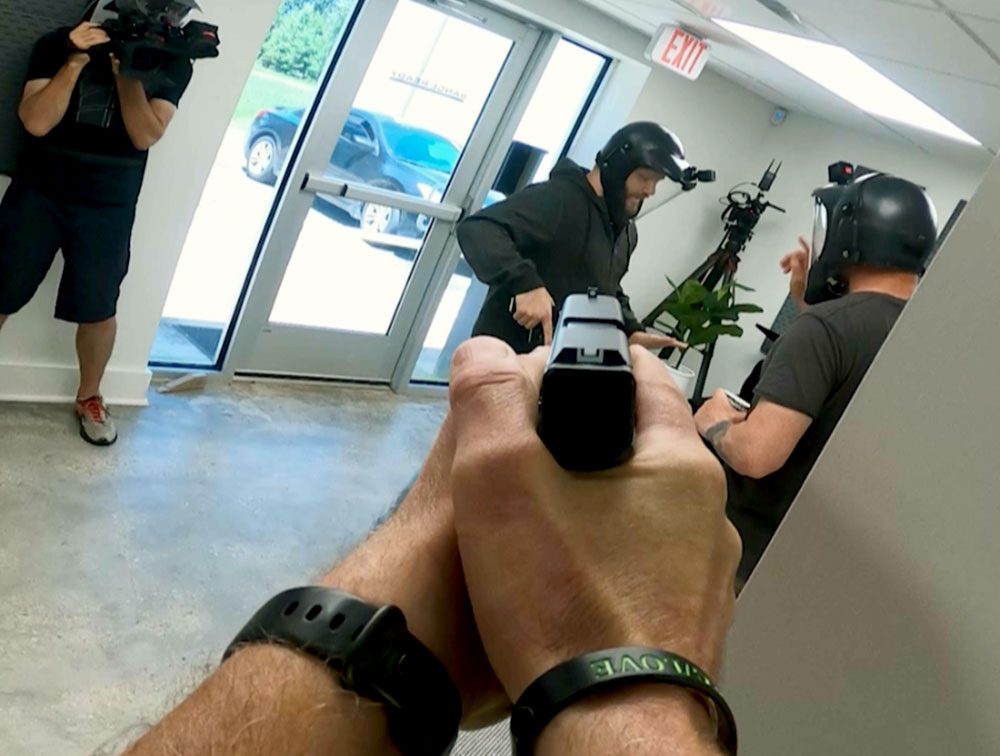
Through the window, the man outside is pacing. That was Matt’s cue. He decided the situation was probably going to come back around, drew his gun and used a support beam in the room to conceal himself. When the man came back in with a gun, Matt was already in position and gave loud, clear commands: get out. The man put his gun away and left. Matt never fired.
“If you overreact, you go to jail. If you underreact, you go to the grave.” — First Person Defender debrief
Matt’s read on how it started was simple. He was worried about the window and the doors, and he moved to a spot where he could see the room without being an easy target. The instructors credited him for not overreacting. They also noted that being on First Person Defender means everyone knows something is coming, so it is hard to relax and act natural.
The instructors looked closely at his barricade. The pole he used was concealment and not real cover, though they didn’t think the other man even noticed him. Then they got into shooting around a barricade. Matt came around the left side of it with his right hand. Should he have switched hands?
The second run uses the same setup with a twist. Matt is calmer this time, and it shows. The same guests arrive, the same confrontation starts, and Matt keeps one eye on the conversation. The angry man is told to take a walk and a breather, and he goes outside again.
Matt had already moved away from the window and put a wall behind him. Then shots hit the building. A woman in the room fell, and the window was hit. Matt drew, told everyone to get on the ground, saw the man through the glass and fired through the window. The man then came through the door, and a gunfight broke out inside the room.
When it was over, Matt had a grazing wound to his side and the other man said he had been hit once in the hand. Matt called 911, started medical aid and reported his own injury. The instructors loved that, because many people forget to pick up the phone. They also noted how few hits either man landed, and said it shows how hard marksmanship is when tension is high and things are moving.
The instructors also had a tactical note. They had pictured Matt slicing the pie around the corner and meeting the man as he came through the door. Instead Matt laid back, and the man came in. Matt agreed on one more thing: at the end of the fight he was sucking air, and he should have started combat breathing sooner.
The instructors agreed that force-on-force, reality-based training is the next thing closest to a real gunfight, and hopefully you never need the real one. Matt put it well: he wants to do it again because he needs the stress and the training, and he is not afraid to go out there and potentially look stupid. Everybody is going to struggle. This is not easy. That is the point of First Person Defender.
If you have ever wondered what you would actually do in a self-defense situation, First Person Defender is looking for its next guest. Email KJ at kj@guntalk.com for more information.
Gun Talk's First Person Defender puts regular people into force-on-force self-defense scenarios. Putting you inside the fight to defend your life or the lives of your loved ones, First Person Defender shows you what can go wrong…and how fast it can happen.
First Person Defender Season 15 is brought to you by Colt, CZ Firearms, HK-USA, Ruger, Safariland, Shooting Sports Life, and VIKTOS.

Gun Talk Giveaway
One lucky winner will bring home:
Open to U.S. residents 21+ only. Void where prohibited.