June 22, 2026
Gun Talk Staff
There is a specific kind of satisfaction in watching something people said was impossible get done. The lever-action rifle, in the collective imagination of the American firearms community, occupies a specific and beloved role: close-range, fast-cycling, timber-ready, and deeply traditional. It is the rifle of the frontier, the cowboy, the deer stand in the hardwoods. It is not, in the conventional understanding, a precision instrument. It is not a coyote rifle for open-country shots at 400 yards. It is not something you take to a Haley Strategic D5 precision class alongside bolt-gun competitors and expect to hold your own.
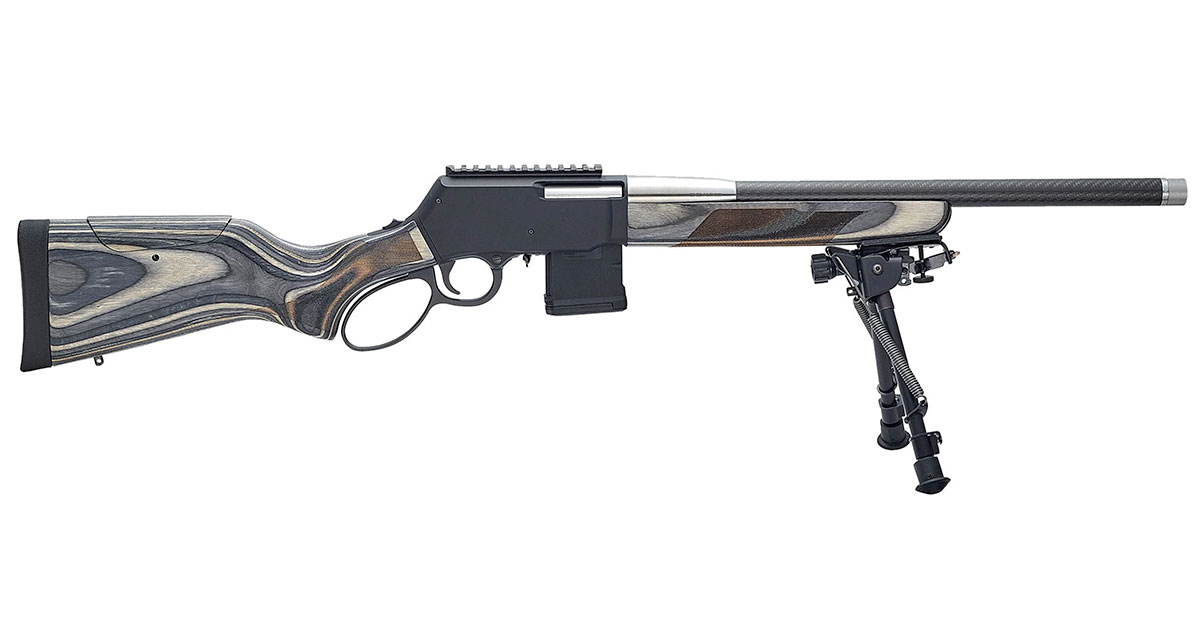
Henry Repeating Arms did not get that memo. Or rather, they got it, disagreed with it, and spent several years proving it wrong. The result is the SPD PREDATOR — a rifle that carries a factory three-shot sub-MOA accuracy guarantee, has been proven in field testing at 1,200 yards, and earned its credibility by going through one of the most demanding precision rifle training environments in the country. And it does all of this in a lever-action platform chambered in .223 Rem/5.56 NATO, built in Rice Lake, Wisconsin, at $2,510 MSRP.
This is not a traditional lever gun with a fancy stock. It is a purpose-engineered precision hunting rifle that happens to use a lever to cycle the action. The distinction matters, and it becomes clear the moment you understand what Henry actually changed to make this rifle work.
The SPD PREDATOR does not exist in a vacuum. It is the second major product from Henry’s Special Products Division — an internal team within Henry tasked with pushing the lever-action platform into territory it has never occupied. The first SPD flagship, the Lever Action Supreme Rifle, was named Guns & Ammo’s 2025 Rifle of the Year. That recognition did not come for being traditional. It came for being excellent in ways the lever-action category had not previously achieved.
The SPD PREDATOR is built on the same advanced architecture as the Supreme but adapted specifically for the predator and varmint hunter’s requirements: smaller, faster targets at longer distances, often on open terrain where a calling setup may produce animals at ranges from 50 to 500 yards within the same stand. That use case demands something that a traditional lever gun chambered in .30-30 or .45-70 was never designed to deliver: flat-shooting precision at distance from a fast-handling platform that can be brought to the shoulder and cycled quickly when the shot presents itself.
“Henry has continued the legacy of innovating the lever action platform. After five days and 1,700 rounds through a precision rifle class, I walked away knowing that what Henry has done is special.” — TA Targets field reviewer
The most fundamental mechanical innovation in the SPD PREDATOR is its bolt design. Traditional lever-action bolt heads are stationary — they reciprocate forward and rearward but do not rotate. This design, carried forward from the 19th century, limits the pressure the action can handle and restricts chambering options to cartridges that fit the tubular magazine and the pressure parameters of the traditional design.
Henry’s SPD action uses a rotating bolt head analogous to the AR-15 design — it rotates and locks into recesses on the barrel extension, providing the camming effect and headspace control that allows the action to handle modern bottleneck cartridges at significantly higher pressures than traditional lever-gun designs permit. This is the engineering breakthrough that makes the .223 Remington chambering not just possible but optimally functional in a lever-action format.
The detachable box magazine — another non-traditional element — flows directly from this design choice. Pointed .223 bullets cannot safely travel in a tubular magazine under recoil, so the SPD feeds from a 10-round Magpul PMAG-compatible detachable box. It will accept virtually any STANAG-pattern magazine, which means shooters with existing AR-15 magazine inventories can run their preferred mags in the PREDATOR. A five-round insert is included for jurisdictions that require it.
The barrel is the PREDATOR’s most consequential component, and Henry sourced it from a BSF — Bamberger Spezialfertigung, a German manufacturer whose carbon-fiber wrapped barrels are respected across the precision rifle market. The 18-inch barrel is 416R stainless steel at its core — a premium grade chosen for its machinability and consistency — button rifled with a 1:8-inch right-hand twist optimized for the .223/5.56 family across a wide range of bullet weights. It is tensioned-wrapped in carbon fiber for three specific purposes: increased rigidity, faster heat dissipation, and reduced overall weight.
The barrel is threaded 1/2x28 TPI for suppressor attachment — a thoughtful inclusion given that predator hunters have strong practical reasons for running suppressed. The lower sound signature reduces the alert to animals that haven’t presented yet, the reduced recoil makes spotting your own hits easier at distance, and the .223 Remington’s favorable suppressor compatibility with subsonic options adds versatility to the setup. Henry explicitly designed the PREDATOR with suppressed use in mind.
The gray laminate stock is a deliberate choice that some traditional Henry buyers might question at first glance. Henry’s furniture heritage runs toward beautiful American black walnut, and the laminate is a departure from that aesthetic. It is not a departure from Henry’s commitment to quality — it is an engineering decision driven by accuracy.
Laminate stocks are built by bonding layers of wood in alternating grain orientations under heat and pressure, then saturating them with synthetic resin. The result behaves more like a composite material than a traditional wood stock: it is significantly more rigid, far more dimensionally stable across temperature and humidity changes, and does not swell or shift the way a solid wood stock can. For a precision hunting rifle where repeatable accuracy across varying field conditions is the design priority, laminate is the correct material choice. The adjustable comb — a critical feature for consistent cheek weld when running optics of different heights — further elevates the practical accuracy argument.
The factory trigger on the SPD PREDATOR is tuned to approximately four pounds with a clean break — a specification that would be considered excellent on many purpose-built bolt-action precision rifles and is genuinely remarkable for a factory lever-action. User adjustability means the trigger can be further refined to individual preference without sending the rifle to a gunsmith. For a hunting rifle that will be pulled from the safe cold on a predator stand and expected to perform, consistent trigger quality is not a luxury. It is a requirement.
| Manufacturer | Henry Repeating Arms │ Rice Lake, Wisconsin |
|---|---|
| Model designation | H23 SPD PREDATOR — Precision Rifle Engineered for Dispatching Agile Targets Over Range |
| Action | Lever-action │ Rotating AR-style bolt head │ Barrel extension lock-up |
| Caliber | .223 Remington / 5.56 NATO |
| Barrel | 18" │ BSF carbon-fiber tension-wrapped 416R stainless steel │ Match-grade │ Button rifled │ 1:8" RH twist │ 6 grooves │ Threaded 1/2x28 TPI │ Free-floated │ Heavy contour |
| Magazine | 10-round detachable Magpul PMAG compatible │ 5-round limiter included │ Accepts STANAG-pattern magazines |
| Stock | Gray laminate │ Adjustable comb │ Laminate fore-end |
| Trigger | Factory-tuned ~4 lbs. │ Clean break │ User-adjustable |
| Rail | Forged carbon-fiber Picatinny rail │ Full-length optic mounting |
| Receiver | Aerospace-grade aluminum │ Black anodized |
| Suppressor ready | Yes — threaded 1/2x28; suppressor-optimized design intent |
| Iron sights | None included — optic-only platform |
| Accuracy guarantee | Three-shot sub-MOA at 100 yards │ Factory certified by SPD engineer │ Only lever-action with this guarantee |
| Built | Rice Lake, Wisconsin │ Individually inspected and certified before shipping |
| Warranty | Henry Lifetime Warranty │ 100% Satisfaction Guarantee |
| MSRP | $2,510 |
| Platform heritage | Built on same architecture as Lever Action Supreme Rifle — Guns & Ammo 2025 Rifle of the Year |
The TA Targets team made a specific choice when they decided to evaluate the SPD PREDATOR: they did not take it to a comfortable range day with controlled conditions and paper targets at 100 yards. They registered it for the Haley Strategic D5 Precision Rifle course — a five-day, high-volume training program designed to expose every weakness in a rifle and the shooter behind it. The students who attend D5 typically arrive with purpose-built precision bolt guns. The TA Targets crew arrived with a Henry lever-action in .223 Remington.
The first two days brought steady 15 mph winds with gusts to 36 mph and rain. Not ideal conditions for the .223 cartridge at distance, which is sensitive to wind and loses velocity faster than larger-caliber precision cartridges. The TA Targets reviewer’s assessment is direct: the conditions did not matter, because the platform and the data were sound. Landing hits was straightforward once the wind calls were understood.
The specific results documented during the five-day evaluation are worth reading slowly:
The reviewer’s conclusion: “After seeing the capability, training with it for five days, and putting over 1,700 rounds through it, I walked away knowing that what Henry has done is special. This is easily one of the most accurate rifles in the armory.”
That is not a review written from a press junket or a manufacturer-controlled media day. It is a field evaluation conducted under deliberately harsh conditions by people who showed up expecting to prove a point and ended up proving a different one.
“I was landing hits at 1,200 yards with nearly 100% accuracy. It did exactly what I had expected a precision rifle to do. Except it was a lever action.” — TA Targets D5 field review
The D5 results are impressive and worth understanding. But the SPD PREDATOR was not designed for a precision rifle class. It was designed for coyote hunters in open country, for fox hunters working hedgerows and fence lines, for varmint hunters on prairie dog towns where shots materialize at unknown distances in seconds and a follow-up cycle is the difference between a productive stand and a missed opportunity.
The lever-action’s advantage in this context is specific: the cycling motion is fast, intuitive, and requires minimal movement of the rifle off the target. An experienced lever-gun shooter can cycle and re-acquire faster than most bolt-action shooters, and significantly faster than someone unfamiliar with bolt-action operation. For predator hunting, where a coyote that wasn’t in your field of view a moment ago has suddenly appeared at 250 yards moving at a trot, that speed advantage is real and valuable.
Combining the lever-action’s cycling speed with the PREDATOR’s sub-MOA precision and its suppressor-ready design creates a hunting tool that covers the full practical spectrum of predator and varmint scenarios: from the 50-yard dog that came in hot on a call to the 500-yard coyote that hung up on the edge of a field and won’t come closer. Most predator hunting rifles excel at one end of that range or the other. The PREDATOR is genuinely competitive across all of it.
Some hunters will have caliber objections to the .223 Remington for serious predator hunting, and those objections are worth addressing honestly. The .223 is not a large-diameter cartridge. It is sensitive to wind, which the D5 evaluation documented plainly. It loses velocity faster at distance than larger alternatives like the 6mm ARC or .22-250 Remington.
What the .223 offers in return is: economical ammunition costs that make high-volume calling practice and training affordable, very manageable recoil that allows faster recovery and re-acquisition, excellent accuracy potential from quality match barrels, and broad commercial availability in virtually every conceivable load configuration from 35-grain varmint to 77-grain match. For predator hunting inside 400 yards — which covers the vast majority of real calling scenarios — the .223 Remington is entirely sufficient in the hands of a competent shooter with good data.
One field reviewer raised the obvious future wish: this exact platform in 6mm ARC. That would solve every velocity and wind sensitivity objection while maintaining the AR-compatible magazine system. Whether Henry pursues additional chamberings in the SPD line is worth watching. For now, the .223/5.56 version is what exists, and it performs.
At $2,510 MSRP, the SPD PREDATOR is not an impulse purchase. It occupies the upper tier of the hunting rifle market, where it competes with purpose-built bolt-action precision hunting rifles from Christensen Arms, Bergara, and Proof Research. Against those competitors, the PREDATOR’s unique value proposition is the lever-action platform itself — its cycling speed, its handling characteristics, and the cultural weight of the lever-action format that no bolt gun can replicate.
| YES — Predator/varmint hunters | Open-country coyote, fox, and varmint hunters who need sub-MOA precision at distance and fast follow-up capability. This is the rifle’s design center. |
|---|---|
| YES — Lever-action enthusiasts | Shooters who love lever-actions and want to see what the platform is genuinely capable of. The PREDATOR answers that question definitively. |
| YES — Suppressed setup builders | Hunters building a quiet predator calling setup. The PREDATOR’s threaded barrel, .223 compatibility with subsonic loads, and lever-action cycling make it one of the more purpose-built suppressor-host hunting rifles available. |
| YES — Training on a budget-ish | .223 ammunition costs allow higher training volume than larger precision cartridges. The PREDATOR is a credible long-range training tool. |
| CONSIDER — Precision rifle competitors | The PREDATOR is not purpose-built for competition, and NRL/PRS divisions may not accommodate the lever-action. But as a training platform or curiosity, it is legitimate. |
| PROBABLY NOT — Big game hunters | The .223 Remington is not appropriate for deer-sized game in most jurisdictions. The PREDATOR’s mission is predators and varmints, not big game. |
| PROBABLY NOT — Budget-sensitive buyers | At $2,510, there are excellent bolt-action hunting rifles at significantly lower price points. The PREDATOR’s premium is for the platform and the precision guarantee. |
The Henry SPD PREDATOR is the most significant lever-action rifle introduced in a generation. That is not hyperbole — it is a factual assessment based on what the rifle achieves. No lever-action rifle has ever carried a factory sub-MOA guarantee. No lever-action rifle has ever been documented making hits at 1,200 yards in a structured precision training environment. No lever-action rifle has combined an AR-compatible detachable magazine, a carbon-fiber wrapped match-grade barrel, a precision-tuned adjustable trigger, and a rotating bolt head in a platform that still cycles with the speed and character of a classic lever gun.
Henry did all of that, backed it with a factory guarantee and a lifetime warranty, built it in Wisconsin, and priced it at $2,510. Is it the right rifle for every hunter? No. Is it the best predator and varmint hunting lever-action ever built? That’s not a debate — it’s the only one in its category. And based on the D5 field evaluation data, it is the most accurate lever-action ever built, period.
If you call coyotes on open ground, if you hunt fox across agricultural terrain with long sight lines, if you have ever wished your lever gun could reach farther and hit harder without losing the speed and character that makes the platform special — the SPD PREDATOR is your rifle. Visit henryusa.com to find a dealer.



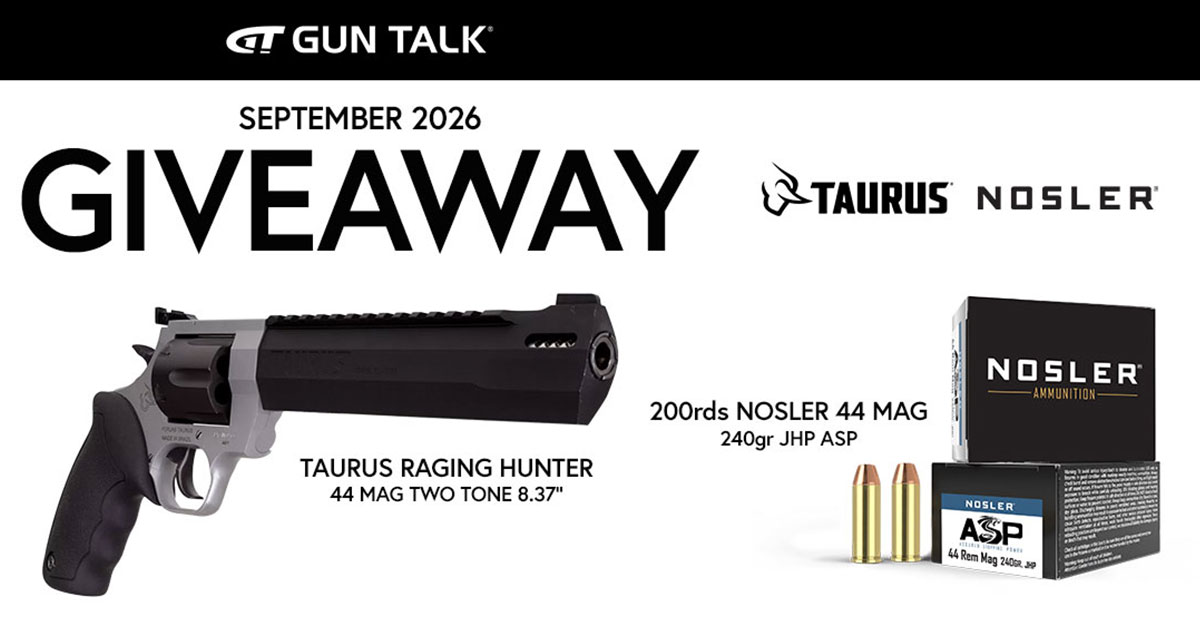
Gun Talk Giveaway
One lucky winner will bring home:
Open to U.S. residents 21+ only. Void where prohibited.