March 10, 2025
[See below for links to purchase products discussed in this article. If you choose to purchase, we may receive a small commission]
If you read any news relating to the firearms industry, you have seen a myriad of companies releasing double-stack 1911 pistols in 9mm. When seeing all this, my first question was “what’s the big deal?” I had only put time into traditional 1911’s in .45 and while I enjoyed shooting them, I didn’t really see what all the fuss was about. I know this is big statement for a lot of you. Before you vow to never read an article from me again, hear me out.
My only real pistol trigger time had been put in on my Glock 34, Smith M&P Pro and the hundreds of pistols I shot working in the industry for 23 years. There wasn’t a time where I had the opportunity to sit behind a $3,500 pistol and really get to know it. Brands like Staccato (STI when I was heavy into shooting), Atlas, and a few others were really all that was out there and I didn’t have the budget for that kind of equipment. The supporting gear like magazines and accessories tend to be on the more cost-effective side for polymer pistols too, making it that much better for my wallet so that’s the pond I swam in.

Fast forward to about a year ago when I got my hands on a Military Armament Corp. MAC 9 DS. With a retail price of $1,099.99 I could finally get into a nice double stack 9mm at a reasonable price. After years of being told I should make the jump, I caved. I planned to use it in an upcoming 3-gun match, the Mountain State 3 Gun Championships in Beckley, WV so I went to work getting it ready for the match.
I found a level 3 holster from Blackhawk and a Safariland ELS competition belt in red because red is faster. Everyone knows that. I was able to get a handful of magazines from TISAS to go with the pistol, so I was set there as well. I had a couple mag pouches that were universal, so I rigged everything up with Safariland’s quick lock system, or QLS for attaching everything to my belt. It makes getting holsters and pouches changed between stages much easier, especially when you jump in your truck. Just squeeze the sides and your holster will slide right out. It’s super convenient and another thing I waited way too long to get.

The only modification I made to the pistol was adding a Trijicon RMR that I had picked up from the prize table at the Mountain State match the year before. I had always shot irons to this point, but with my aging eyes and the mounting platform right there, I decided to make the jump. I’ll be ordering my bifocals soon to go with it.
My first shots with the pistol were at 10 yards standing. As you can see, no complaints. To push the test of this gun even further, I ordered 1000 rounds of Blazer Aluminum 115 gr. 9mm. Yep, aluminum cased ammunition for my brand-new, barely fired pistol to go to a match. Is this recommended? Not really. Did I do it? You bet. I believe in testing under pressure, so I went whole hog, and I was not disappointed.

During the match, I was very impressed with the performance of the pistol. I had zero malfunctions, even when shooting one full day and 5 stages in a torrential downpour and the next under a blazing sun. The bigger profile of the pistol took some getting used to, but by the end of the match, the MAC and I were one. The Trijicon RMR was visible on both days with no problems, and the gun went bang every time I pulled the trigger. I didn’t win the match, but it’s not the pistol’s fault. That match brings out some of the best in the world and if you have an open spot in August 16-17 this year, get over to Practiscore and get signed up.
Final Verdict: I love this thing. I have been bitten by the bug, and I am ashamed it took this long. The smoothness of the action is more than noticeable over my polymer guns, and I was able be more accurate with it faster than other pistols I had used. There are a lot of double stack 1911s out there, but if you are “Double Stack Curious,” you should give MAC or its sister company TISAS a try. They are always releasing new versions and even have a 5” available. I’ve been eyeing some of those too. I guess it’s part of the game.
-Nick
Here's what you're getting for just over a grand:
Caliber: 9mm Luger
Capacity: 17+1
Action: Single-action, 1911-pattern
Barrel: 4.25" bull barrel, 4140 carbon steel, QPQ Tenifer finish, 11-degree target crown
Frame: Forged 4140 carbon steel with Cerakote black finish
Slide: Forged 4140 carbon steel, QPQ Tenifer finish
Grip module: Polymer with integrated grip texture
Trigger: Skeleton-style, single-action, approximately 3–4 lb. pull with overtravel adjustment
Sights: Green fiber optic front, black serrated rear (drift adjustable)
Optic ready: Yes — RMR-pattern optic plate included
Safety: Ambidextrous thumb safety + grip safety
Rail: M1913 Picatinny accessory rail
Magwell: Removable aluminum competition magwell (included)
Magazine compatibility: STI/2011-pattern (Check-Mate manufactured)
Weight: 37 oz. (empty, with magazine)
Overall length: 8"
Includes: Two 17-round magazines, cleaning kit, cable lock, hard case
MSRP: $1,099.99 (street price typically $1,000–1,050)
The spec that matters most here is the price. You're getting a forged steel frame and slide, an optics-ready 2011-style pistol with a competition magwell and a sub-4 lb. trigger for about a thousand dollars. Two years ago, the cheapest way into this category was the Springfield Prodigy at $1,500. The MAC 9 DS undercuts that by $500 and doesn't feel like it's cutting corners to get there.
The budget double-stack 1911 market has exploded. Here's where the MAC 9 DS fits in.
MAC 9 DS vs. Staccato P: The Staccato P is the benchmark — hand-fitted, proven in competition and duty use, and backed by a massive aftermarket. It's also $2,500+. The MAC doesn't match the Staccato's refinement, fit, or trigger feel. But it delivers 80% of the shooting experience at 40% of the cost. If you're "double-stack curious" (as we put it in the article) and want to know if this platform is for you before dropping Staccato money, the MAC is the perfect entry point.
MAC 9 DS vs. Springfield Prodigy: The Prodigy was the first sub-$2,000 double-stack 1911 from a major American brand. It's a solid gun that's been improved since its rocky early production run. The MAC undercuts the Prodigy by about $500 and is arguably simpler and more straightforward in design. The Prodigy has the edge in aftermarket support and brand recognition. For pure value per dollar, the MAC wins.
MAC 9 DS vs. Tisas Carry B9 DS: Tisas and MAC are sister companies under the same Turkish manufacturing umbrella, so the comparison is natural. The Tisas B9 DS targets a slightly different market — more carry-oriented with some models in compact configurations. Quality levels are very similar between the two. If you want a full-size competition/range gun, go MAC. For a carry-focused double-stack, look at the Tisas. For our take on the Tisas, read our Tisas PX-9 review.
MAC 9 DS vs. SIG P211 GT4/GT5: SIG's entry into the double-stack 1911 space brought the P211 in two configurations. It carries SIG's name, build quality, and a higher price tag. If brand pedigree and SIG's customer service matter to you, the P211 is worth the premium. If you want to spend less and get into the game, the MAC is the more practical choice. Read our SIG P211 breakdown here.
For a full comparison of every double-stack 1911 on the market right now, see our 2026 Double-Stack 1911/2011 Buyer's Guide.
A few things worth mentioning that we learned through our time with this pistol:
Magazine compatibility: The MAC 9 DS runs STI/2011-pattern magazines. The two included Check-Mate magazines work well. You can also source magazines from TISAS and other 2011-pattern suppliers. Staccato magazines will generally fit but check compatibility before buying a stack of them — tolerances can vary between manufacturers.
Optic mounting: The included RMR-pattern optic plate makes mounting a Trijicon RMR, Holosun 507C, or similar footprint optic straightforward. We ran ours with a Trijicon RMR through the 3-gun match and it held zero through a full day of rain and sun with zero issues.
Break-in: Like most 1911-pattern pistols, the MAC benefits from a break-in period. The first 200 rounds may feel slightly tighter than a fully broken-in gun. After that, the action smooths out noticeably. We ran aluminum-cased Blazer through ours from nearly the start with no reliability issues — but running brass for the first couple hundred rounds is a safer approach if you want to play it by the book.
Grip sizing: The polymer grip module is one-size-fits-all. If you have larger or smaller hands, the aftermarket for 2011 grip modules is growing but still limited compared to the Staccato ecosystem. The factory grip texture is adequate but not aggressive — it works fine with dry hands but consider stippling or grip tape if you shoot in wet conditions.
Is the MAC 9 DS reliable?In our experience, yes. We ran over 1,000 rounds through ours — including aluminum-cased Blazer in a competitive 3-gun match environment — with zero malfunctions. That included a full day shooting in heavy rain. No failures to feed, no failures to extract, no light primer strikes. For a $1,000 pistol, that's impressive.
Is the MAC 9 DS a 2011?Technically, no. "2011" is a trademarked term owned by Staccato (formerly STI). The MAC 9 DS is a double-stack 1911-pattern pistol in the 2011 style. It uses the same magazine pattern, a similar frame/grip module construction, and the same basic operating system. For all practical purposes, it shoots and handles like a 2011 — it just can't legally use that name.
What magazines work in the MAC 9 DS?The MAC 9 DS uses STI/2011-pattern double-stack magazines. The included Check-Mate magazines are reliable and well-made. TISAS magazines also work. Some aftermarket 2011 magazines will fit, but always test function with any new magazine before relying on it.
MAC 9 DS vs. Staccato — is it worth the upgrade?If you're a competitive shooter or professional end-user who demands the absolute best trigger, fit, and aftermarket support, yes — the Staccato is a better gun. If you're a recreational shooter, casual competitor, or someone exploring the double-stack 1911 platform for the first time, the MAC delivers an outstanding experience at a fraction of the cost. Many shooters start with a MAC and upgrade to a Staccato later. Many others find the MAC is everything they need.
Where is the MAC 9 DS made?The MAC 9 DS is manufactured in Turkey by the same parent company that produces TISAS firearms. It's imported and distributed by Military Armament Corporation. Turkish firearms manufacturing has improved significantly in recent years, and both MAC and TISAS have established solid reputations for quality at accessible price points.



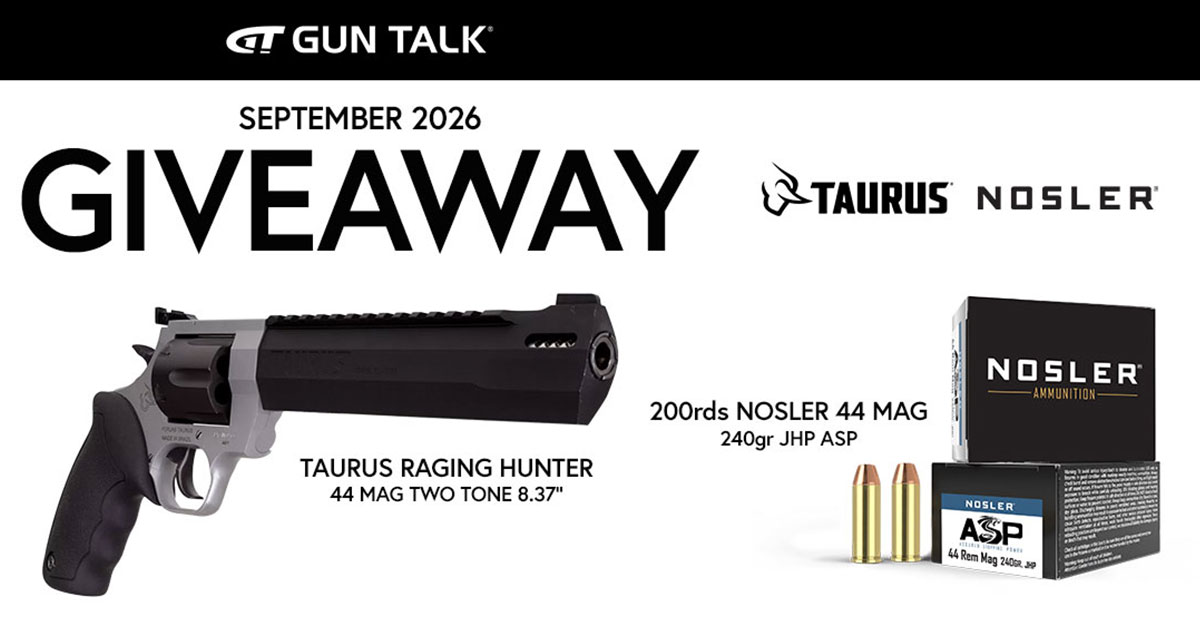
Gun Talk Giveaway
One lucky winner will bring home:
Open to U.S. residents 21+ only. Void where prohibited.