July 16, 2026
Chris Cerino
You don’t learn what a red dot can do by looking at a spec sheet. You learn it when somebody like Kyle Lamb is running you through a drill at speed and the dot either shows up where it’s supposed to, or it doesn’t. That’s the thing about getting to work with people who operate at that level — they have zero patience for gear that doesn’t earn its spot, and that standard filters back to everything you’re running.
Leupold brought the Pro F2 to Grand Island, Nebraska for its launch event, and they didn’t set up a nice comfortable square range with plenty of time between strings. They brought Kyle Lamb and Doug Koenig to run us through drills that were specifically designed to put pressure on the optic — transitions, movement, low-light… the works. Leupold wanted shooters to see exactly how the F2 performs when you’re not taking your time.
The short version: it performs. The longer version is below, but that’s the headline. The dot was right there every time. The illumination controls responded exactly when you needed them to. And the picture through that glass is genuinely as good as anything in this category at this price point, which is $899 MSRP.
“You don’t learn what a red dot can do by looking at a spec sheet. You learn it when somebody like Kyle Lamb is running you through a drill at speed and the dot either shows up or it doesn’t. The F2 showed up.” — Chris Cerino, Gun Talk Media
Leupold didn’t bring just anyone to Grand Island to run these drills. Kyle Lamb is a former U.S. Army Special Forces sergeant major with multiple combat deployments, the founder of Viking Tactics, and one of the most respected firearms instructors in the country. Doug Koenig is a 27-time USPSA National Champion and world-record holder in practical shooting. Between the two of them, you’re looking at a combined five or six decades of experience running guns at the absolute highest levels across combat and competition.
The significance of having these two specifically run the launch event is not just marketing. Leupold is making a clear statement about who the LCO Pro F2 is for and what it’s expected to do. Kyle Lamb represents the defensive and tactical end of the user base — people who carry carbines professionally, who need gear that works in the dark and in the mud and under genuine stress. Doug Koenig represents the competitive end — people who run gear as fast as it can possibly be run and immediately know when something is slowing them down or letting them down.
When an optic earns approval from both ends of that spectrum in a single event, that’s not a coincidence. That’s a product that works across the full range of what a serious red dot is asked to do.
The original Leupold LCO has been around for years and built a loyal following in the carbine community — military, law enforcement, competitive shooters, serious recreational shooters. It earned that following on the strength of its construction (machined US aluminum, the same standard Leupold applies to everything they build), its glass clarity, and the lifetime guarantee that backs every Leupold product. The original had 16 illumination settings and a 1 MOA center dot.
The Pro F2 takes that foundation and adds a meaningful set of upgrades that address the things the original LCO shooters consistently asked for. Here’s what actually changed:
Twenty daylight settings and ten dedicated night vision settings. The original LCO had 16 total. The expansion to 30 — with a full ten dedicated night vision levels — is the most significant practical upgrade for anyone running the F2 with NVGs. With the NFA tax stamp gone and the suppressor market booming, more gun owners are running suppressed setups with night vision capability. The ten dedicated NV settings are not an afterthought.
On the range in Grand Island, Chris ran the F2 through several light transitions specifically to evaluate the NV settings. The protected night vision button prevents you from accidentally activating the NV settings in daylight — which matters when you’ve got NVGs up and a bright NV illumination setting would flare your tubes. That’s a detail that comes from people who actually use this gear operationally, not from a product committee.
This is the feature that Chris noticed most immediately on the range. The rapid illumination dial cycles through all 20 daylight settings with a quick half-turn spin in either direction. That sounds simple, but it has a meaningful practical consequence: you can go from your lowest daylight setting to your highest, or anywhere in between, in a single half-turn motion with your thumb while maintaining your grip.
In the real world, going from bright midday sun to the shade of a structure can happen in a second when you’re moving. The original LCO required multiple clicks to traverse the full illumination range. With the rapid dial, you make one deliberate motion and you’re where you need to be. You don’t have to think about how many clicks it’s going to take. You just dial.
Leupold’s Motion Sensor Technology is not new to the product line, but the implementation in the Pro F2 extends average battery life to 30,000 hours. That number needs context: it means roughly 3.4 years of continuous operation, or several decades of regular use. MST activates the optic when it detects movement and puts it into a low-power sleep state when the firearm has been stationary for a set period.
For a carbine that sits in a safe or a vehicle for extended periods between uses — which describes most defensive firearms most of the time — MST means the battery is effectively managing itself. You’re not going to pick up your home defense carbine in an emergency and find the dot dead because you left it on. That’s not a trivial feature for a defensive optic.
Lockout mode turns off the Motion Sensor Technology and prevents unintentional setting changes once your preferred illumination has been selected. This is specifically useful in two scenarios: when you’ve got the F2 set up for a night vision run and you don’t want the dial getting bumped during movement, and when you’re in a competition context and you want your settings to stay exactly where you put them between stages. On the Grand Island range, Kyle Lamb specifically mentioned lockout mode in the context of making the optic “more surgical” — when you’ve dialed to exactly the right illumination for your conditions, you want it to stay there.
The Pro F2 offers four selectable reticle configurations, compared to the original LCO’s single 1 MOA dot:
The 65 MOA outer ring is genuinely useful for dynamic defensive work. At close range it gives you a massive reference frame that helps confirm your point of aim when you’re in a stressful present-and-shoot scenario. At distance, you switch your focus to the 1 MOA center dot. Doug Koenig’s preference was for the ring-and-dot combination in competition contexts precisely for this reason — speed up close, precision as needed at distance.
| Magnification | 1x (true-to-life sight picture, open-eyes shooting) |
|---|---|
| Eye relief | Unlimited |
| Field of view | 140 ft @ 100 yards |
| Length | 3.5 inches |
| Sight height | 1.5 inches (absolute co-witness height) |
| Weight | 9.6 oz (including battery) |
| Illumination | 20 daylight + 10 night vision settings = 30 total |
| Reticle options | 4 selectable: 65 MOA Ring + Compass Points + 1 MOA dot │ 65 MOA Ring + 1 MOA dot │ Compass Points + 1 MOA dot │ 1 MOA dot only |
| Adjustment range | 140 MOA elevation │ 140 MOA windage │ Click windage and elevation adjustments |
| Motion Sensor Tech | MST™ — extends average battery life to 30,000 hours |
| Lockout mode | Prevents accidental setting changes │ Also disables MST when engaged |
| Illumination dial | Rapid Illumination Dial — half-turn cycles through all 20 settings in either direction |
| NV protection | Protected night vision button prevents accidental daylight NV activation |
| Housing | One-piece machined aircraft-grade US aluminum │ Ultra-rugged |
| Waterproof | To 66 feet (shockproof, fogproof) |
| Finish options | Matte Black │ Flat Dark Earth (FDE) |
| Part numbers | Matte: 187640 (A) │ FDE: 187641 (B) |
| Origin | Designed, machined, and assembled in the USA |
| Warranty | Leupold Lifetime Guarantee |
| MSRP | $899.99 (both finishes) |
| Availability | FDE now available at Leupold.com │ Matte ‘Coming Soon’ at time of launch |
Specs are one thing. The glass is where a red dot earns or loses its reputation over time, and the Leupold LCO line has always had a strong answer to the glass question. The Pro F2 continues that with what Leupold describes as a premium, distortion-free, recessed aspheric lens. The recessed design isn’t just an aesthetic choice — it protects the glass from debris impact and reduces glare that could wash out your reticle in specific lighting conditions.
Chris’s assessment on the range in Grand Island: the picture is genuinely clean. There’s no notable distortion at the edges of the window, the dot doesn’t bleed or bloom in the way that budget optics often do when you crank the brightness, and the wide unobstructed field of view is one of the things that makes the LCO platform feel different from more enclosed red dots. You see around the optic. Your peripheral vision stays in the picture. That matters enormously in the kind of dynamic shooting scenarios the F2 was designed for.
At $899.99, the Pro F2 is priced at the premium end of the red dot market — below the Aimpoint ACRO P-2 and Steiner MPS at $599-799, competitive with the top Holosun options, and positioned as a direct competitor to the EoTech XPS3-0. Let’s be specific about who this optic is built for, because at $899 you should know exactly what you’re buying and whether it’s the right call for your specific use.
The original LCO didn’t need a complete redesign. It needed specific, targeted upgrades that people who use it every day had been asking for. More illumination levels, especially for NV. Faster access to those levels without multiple button presses. Better battery management. More reticle choices. And a lockout mode to make sure that once you’ve dialed in your setup, it stays dialed in.
The Pro F2 delivers all of that. It keeps everything that made the original LCO earn its reputation — the machined US aluminum, the premium glass, the lifetime guarantee, the absolute co-witness height, the unlimited eye relief — and adds the upgrades that the field asked for. Having Chris Cerino on the ground in Grand Island with Kyle Lamb and Doug Koenig running the drills gave us something that a press release alone can’t provide: the answer to whether those features work when it matters.
They do. The LCO Pro F2 is available now in FDE at $899.99 from leupold.com, with the matte version coming soon. If you’ve been waiting for Leupold to upgrade the LCO for the modern optics market, the wait is over.
Photos courtesy of Leupold Optics.



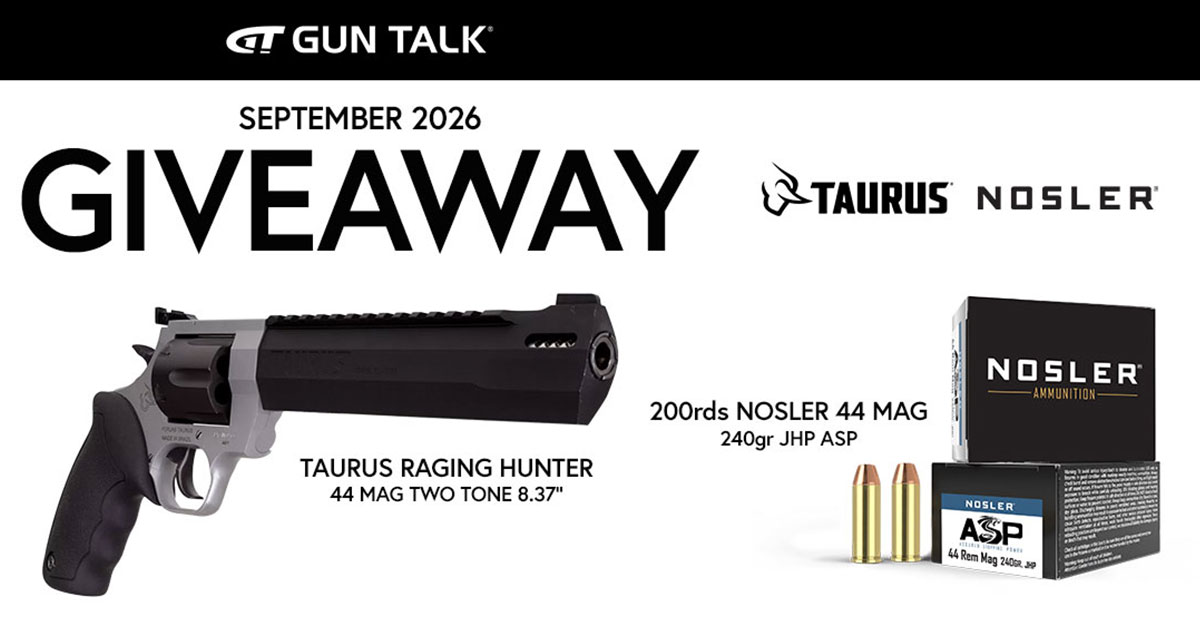
Gun Talk Giveaway
One lucky winner will bring home:
Open to U.S. residents 21+ only. Void where prohibited.