October 22, 2026
Gun Talk Staff
Mike is from Nashville, Tennessee, and co-hosts the Whiskey and Windage podcast. He's a general contractor, which means he spends most of his day driving between job sites and suppliers. His father was in law enforcement, so guns were normal life growing up: hunting rifles, ARs, pistols, whatever you can name. Mike hunted too, and says guns were second nature to him.
He carries to protect himself and the people he loves. His worst-case scenario is someone harming his wife or kids, and his approach would be to do anything possible to keep them safe. The instructors saw a guy who loves the Second Amendment, loves his family and just wants to live a good life, but who wouldn't hesitate to turn on the aggression if it came to that.
Because Mike is on the road all day, the show built his scenario around a road rage incident. The twist: he wouldn't be driving, so he wouldn't have the control he'd like. Mike came in with an open mind and a positive attitude, and was clear about what he wanted: do the best he could and learn something.
“Even though I can control myself, we can’t control how they react.” — Mike
Mike is riding in the car with his buddy Matt, who is driving. Matt thinks he might have cut off the driver behind them. A moment later the other driver is honking and flashing his lights, and then he pulls up and gets out of his car.
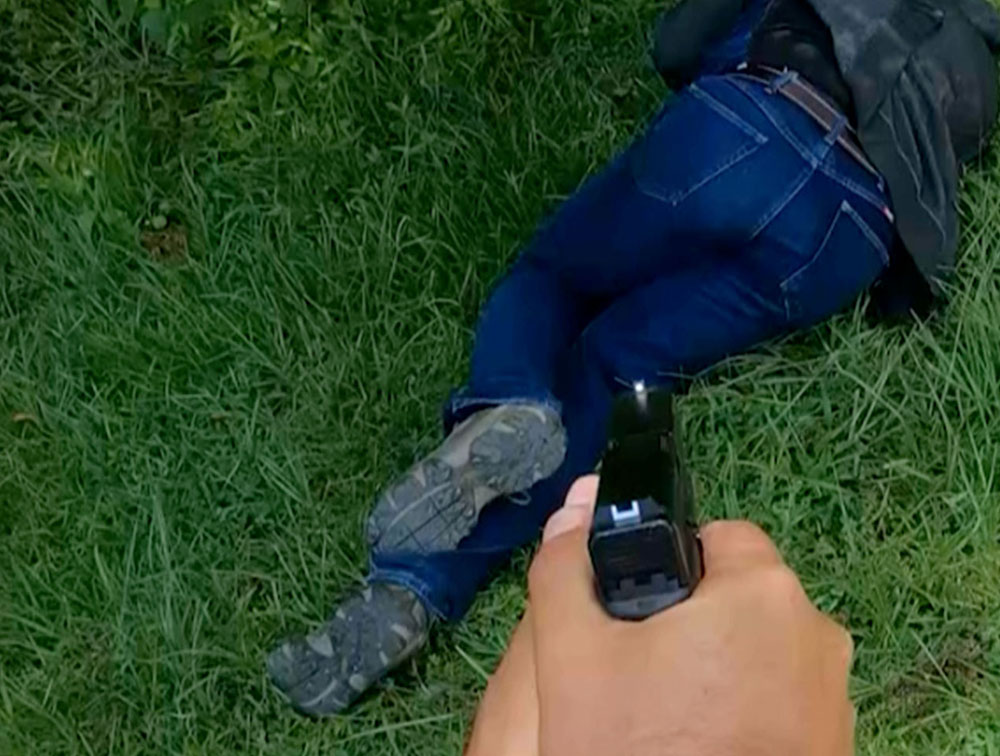
Mike gets out of the passenger side and starts around the back of the car. He's scanning, but he can't see the man at the rear of the vehicle. As he moves toward the corner, three shots go off. The man comes toward him with his hands at waist level. Mike draws and shoots.
The man had no gun. According to the debrief, Matt, Mike's buddy, had fired shots to get the man to back away from the car. Mike heard gunfire without knowing whose it was, and that is exactly the problem.
Mike told it straight. He was moving toward the front of the car when he heard the shots, and then he was face to face with the man. “At that point, I drew and shot.” He called the whole thing reactive. He also named two things he’d never thought about: first, that he would never stop for a road rage incident, and second, that he had never considered getting out on the passenger side to go confront someone.
The instructors were measured about it. They didn’t fault Mike for getting out of the car. The problem was what came next: he met the man at a bad position, startled by gunfire, with no cover and no distance, and he drew and shot without looking at the man’s hands. One instructor said it plainly: “I’d love to be able to defend him, but I have to move at a speed at which I can take everything in.” Another pointed out that without video, it would be Mike’s word against his word, with a man in a ditch who had no gun in his hand.
“I’m okay with what I did … but yeah, I could definitely use some training on this.” — Mike
Between scenarios, the instructors put Mike through two drills. The first was a shoot-don’t-shoot exercise built around a car. The bad guy sits in the car, and every time Mike tells him, “Sir, don’t go in the car,” he turns around holding something. It might be a cell phone, cigarettes, insurance papers or a gun. Mike has to assess what's in his hands before he decides.
It’s harder than it looks. Mike admitted he could be prepping, seeing the gloss and the black and trying to work out what he was looking at. The instructor liked that he moved his feet, then showed him another option: tell the man, “Please stay out of the car.” Cutting that angle makes you safer, and you don’t have to stand there waiting to see what he turns around with. Then came the observation that landed: “Your best draw was when you shot him with his hands empty.” In the zone, you move fast. In the drill, you think.
“Deadly force is not a reaction. It is a conscious decision.” — First Person Defender instructor
The instructor was careful to add that there may be a time when it is a reaction, and it will probably be a very solid shoot because you don’t have time to think. But you have to be thinking always.
The second drill tackled a belief many gun owners carry: if I point my gun at someone, I have to shoot. Just because you present your gun doesn’t mean you have to shoot it, and just because you touch the trigger doesn’t mean it has to go off.
To practice, the instructor ran a simple drill that works at an indoor range. A partner sounds a tone, the shooter presents the pistol, and the partner yells “stop,” at which point the shooter has to stop the trigger press. If you watch the trigger finger, you see how fast it gets there and how well it holds. The instructor’s reasoning: when people see you draw, a lot of things can change. They drop the knife, they drop their gun, they turn and run, or the background changes. “We don’t want to shoot anybody we don’t have to shoot.” One run ended with a gun that was, in his words, about to go off. That’s the level of control you need if you carry and might present a gun at an adversary.
Mike climbed back in the car with Matt for the second scenario, and everything felt the same. Cool, calm, collected. Then the horn started honking and the lights started flashing, and he knew it was about to be on.
This time the bad guy was bigger and meaner. Mike looked through the rear glass to read the man’s demeanor. He came out aggressive, with his hands waving. Mike realized that from the passenger seat he wasn’t in a position to be effective, and that if violence occurred, his options were limited. He needed to create separation.
The twist was that this bad guy had a knife. As Mike came around the back of the car, the man reached into the car through the window and stabbed Matt. Mike said hey, fired two shots, and then, as the man came out of the car and toward him, fired three more.
The question was the one from scenario one: what did Mike see? He may have seen the knife. He may have heard Matt yelling, “He’s got a knife.” An instructor said it’s impossible to tell, and explained why. In the moment, it takes a while to process the information, and after a night’s sleep people start to remember things they swear they saw or heard. When they grill people right after an event, it’s very hard to get a good read. That, the instructor said, is a great reason not to make a statement very soon after.
“Decision-making has to be part of your plan. React too quickly, you can end up in jail. React too slowly, you can end up dead.” — First Person Defender
Mike’s verdict on his own performance was upbeat. He thinks he did great in both scenarios, with definite things to work on, and his view hasn’t changed: everybody should do this if they have the chance. The instructor’s verdict was kind, too, with a to-do list. Mike doesn’t do force-on-force training, and doing it on camera in front of everyone isn’t easy. But he needs to get the gun up in front of his face, start seeing sights, and train more. Handgun isn’t his forte, and the instructor hopes he makes it more of a priority.
Mike is a good guy who drives all day and carries for the right reasons. He still shot an unarmed man in the first scenario, and in the second he had to sort out what he saw while a knife was in play. That’s the point of First Person Defender: let regular people find those gaps in a place where nobody gets hurt for real. Mike said he lives for this.
Watch the full episode above, and if you’ve ever wondered what you’d actually do in a self-defense situation, First Person Defender is looking for its next guest. Email KG at guntalk.com for more information.
Gun Talk's First Person Defender puts regular people into force-on-force self-defense scenarios. Putting you inside the fight to defend your life or the lives of your loved ones, First Person Defender shows you what can go wrong…and how fast it can happen.
First Person Defender Season 15 is brought to you by Colt, CZ Firearms, HK-USA, Ruger, Safariland, Shooting Sports Life, and VIKTOS.

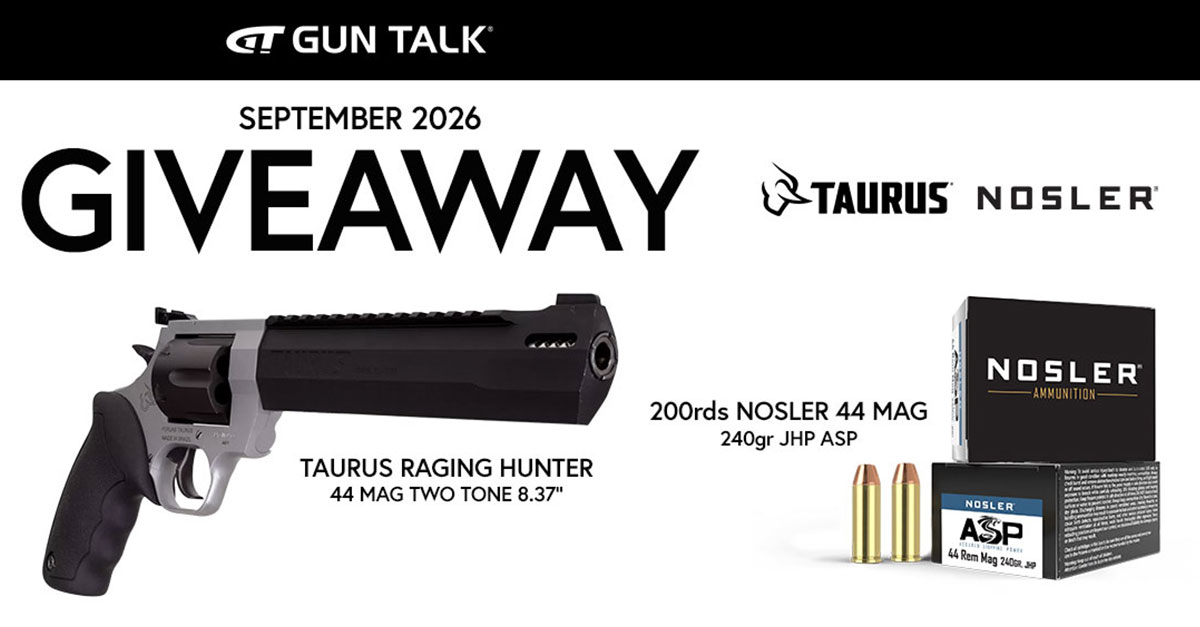
Gun Talk Giveaway
One lucky winner will bring home:
Open to U.S. residents 21+ only. Void where prohibited.