June 22, 2026
Gun Talk Staff
There is a version of this story that writes itself as a punchline. Glock — a company whose grip angle has been the subject of debate for 40 years, whose ergonomics have been critiqued by virtually every competitor, writer, and shooter who ever held one, and whose response to that critique has historically been a shrug and a reminder of the reliability record — has now produced a pistol that actually addresses the complaints. And it’s still a Glock. In fact, it is arguably the best pistol Glock has ever made.
The Gen 6 was announced Dec. 6, 2025, timed deliberately to coincide with Glock USA’s 40th Anniversary, and hit dealer shelves Jan. 20, 2026. The initial launch brought three 9mm models: the G17, G19, and G45. After nearly six months of in-hand time for reviewers, law enforcement armorer evaluations, and civilian buyers logging round counts into the thousands, the picture on the Gen 6 is clear enough to assess honestly. The short version: Glock made significant, meaningful changes to the interface points that actually matter, left the proven internals largely intact, and delivered a pistol that competes more directly with the best 9mm options on the market than any previous generation.
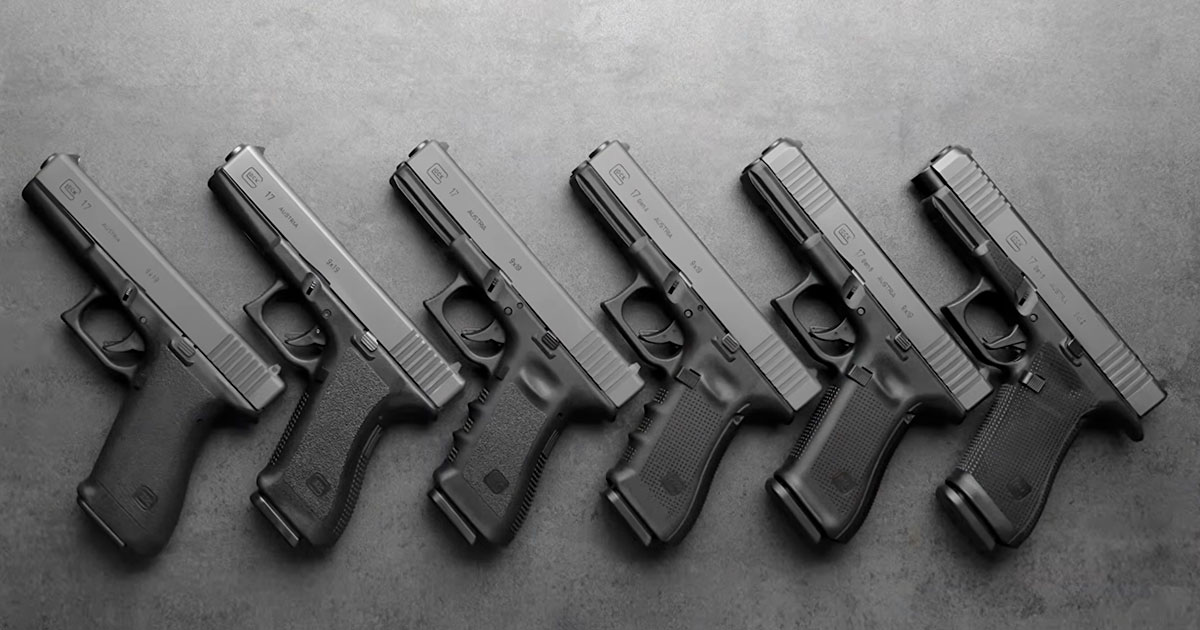
Understanding why the Gen 6 matters requires a brief look at why the previous generations didn’t fully solve the problems that kept Glock critics talking. The Gen 4, introduced in 2010, added modular backstraps and a reversible magazine release — useful improvements, but essentially ergonomic accessories bolted onto an unchanged frame geometry. The Gen 5, released in 2017, added the excellent Glock Marksman Barrel, removed the finger grooves that divided shooters for years, applied the nDLC slide finish, and introduced ambidextrous slide stop levers. These were genuine improvements. But the fundamental grip shape, trigger geometry, and optics mounting system remained compromises.
The Gen 6 is a different kind of iteration. The changes are concentrated in precisely the areas where competitive 9mm pistols had pulled ahead: grip ergonomics, optics integration, and trigger feel. The underlying action — Glock’s tilting, delayed-blowback, Safe Action system — is largely unchanged, which is the correct call. That system works. It has been proven by decades of military, law enforcement, and civilian use across tens of millions of pistols. The Gen 6 doesn’t fix what isn’t broken. It fixes the parts that were.
“Glock finally did what everyone figured they’d never do — they changed the formula. The Gen 6 is not another texture change like Gen 4 or Gen 5. Glock actually listened to complaints about grip ergonomics and red dot mounting.”
The most significant mechanical change in the Gen 6 is the redesigned optics mounting system, now standard across every model in the lineup. No separate MOS variant. Every Gen 6 is optics-ready from the factory, full stop.
The previous MOS system — which used interchangeable adapter plates to accommodate different red dot footprints — worked, but carried persistent complaints about plate movement under recoil, Loctite interfering with the pistol’s working parts, and inconsistent mounting depth that varied by red dot model. The Gen 6 ORS (Optic Ready System) addresses these issues structurally. The optic screws drive directly into the slide through a redesigned mounting area with reinforced structural material around the cut. Polymer inserts protect the optic cut when running iron sights. The mounting surface sits lower on the slide, improving co-witness height with standard iron sights and placing the optic closer to the shooter’s hand for faster acquisition.
Real-world testing has confirmed the improvement. In documented round count evaluations, optics mounted on Gen 6 slides maintained zero across high-volume training sessions without the plate movement issues that occasionally surfaced on Gen 5 MOS platforms. For the growing majority of defensive and duty shooters running pistol red dots, this was the Gen 6’s most operationally meaningful upgrade.
The Gen 6 grip frame represents the most substantial ergonomic redesign Glock has undertaken since the original design left Austria. Key changes include a palm swell that fits into the natural curvature of the hand, a longer beavertail for a higher, more secure grip with less slide bite, a deeper trigger guard undercut for a more aggressive grip purchase, and a roughened area in front of the trigger guard that encourages proper trigger finger discipline.
The surface texture — designated RTF6 — is significantly more aggressive than Gen 5 and approaches the feel of quality aftermarket stippling jobs. Critically, the texture is placed strategically rather than uniformly: high-traction in the grip areas where contact under recoil matters most, less aggressive against clothing for carry applications. The grip redesign also produces a lower bore centerline relative to the shooter’s hand, which means the optic sits closer to eye level and perceived muzzle flip is reduced under rapid fire.
Multiple independent reviews have noted that the Gen 6 grip is the first factory Glock frame that substantially reduces the appeal of aftermarket frame work. That is not a small statement in a market that has sustained an entire cottage industry of Glock grip stippling and frame modification services for 15 years.
The Gen 6 introduces a flat-faced trigger across the entire lineup, replacing the curved trigger shoe of every previous generation. Trigger pull weight remains consistent with previous models — averaging 5.6 to 5.8 pounds in independent testing — but the flat-face geometry changes the feel of the trigger through its travel in ways that many shooters find more consistent and predictable, particularly for shooters transitioning from competition pistols or 1911-pattern triggers.
The Safe Action trigger lever system — the passive safety integrated into the trigger face — is retained in the Gen 6 design. Glock’s core safety architecture is unchanged. The flat-face modification is a geometry change, not a mechanism change, and its primary benefit is tactile consistency of trigger finger placement shot to shot.
The Gen 6 returns to a single captured recoil spring, abandoning the dual recoil spring assembly that Glock introduced in the Gen 4 to address recoil impulse. The Gen 6 single spring uses updated internal geometry to manage the same recoil impulse that motivated the dual-spring design, while simplifying the assembly and returning to a configuration that many Glock armorers and users preferred for its straightforward field-strip simplicity.
| Spec | G17 Gen 6 | G19 Gen 6 | G45 Gen 6 |
|---|---|---|---|
| Action | Safe Action, striker-fired | Safe Action, striker-fired | Safe Action, striker-fired |
| Caliber | 9mm Luger | 9mm Luger | 9mm Luger |
| Barrel Length | 4.49 in. | 4.02 in. | 4.02 in. |
| Overall Length | 8.03 in. | 7.28 in. | 7.28 in. |
| Height | 5.47 in. | 5.04 in. | 5.47 in. |
| Width | 1.34 in. | 1.34 in. | 1.34 in. |
| Weight (empty) | 25.17 oz. | 23.63 oz. | 24.83 oz. |
| Magazine | 17+1 standard | 15+1 standard | 17+1 (G17 frame) |
| Frame | Full-size | Compact | Compact slide / Full frame |
| Trigger Pull | ~5.6–5.8 lbs. | ~5.6–5.8 lbs. | ~5.6–5.8 lbs. |
| MSRP | $745 | $745 | $745 |
| Best For | Duty, home defense, range | Concealed carry, EDC | Duty carry, optics builds |
The Gen 6 has now been in civilian and law enforcement hands for nearly six months, long enough for meaningful reliability data to emerge from sources beyond manufacturer-sponsored media events. The numbers are consistent with Glock’s historical reputation, and in some respects they exceed it.
In documented consumer evaluations tracking up to 15,000 rounds fired without routine cleaning intervals or heavy lubrication, Gen 6 variants exhibited exceptional reliability. One tracked evaluation documented exactly two failure-to-feed malfunctions in a G17 over a 10,500-round interval. A concurrent G45 evaluation recorded zero malfunctions under identical conditions. These numbers are in line with — and in the case of the G45, better than — the documented reliability history of the Gen 5 platform, which was already among the most reliable production 9mm pistols available.
Accuracy data from bench-rest evaluations is similarly strong. The Gen 5 Glock Marksman Barrel — retained in the Gen 6 — was capable of five-shot groups at 25 yards of 2.5 inches or better. Gen 6 evaluations have produced consistent results in that range, with the improved grip geometry credited with better practical accuracy from standing unsupported positions due to more consistent trigger finger placement and reduced grip shift under recoil.
“In documented consumer evaluations tracking up to 15,000 rounds, the Gen 6 G17 had two failures-to-feed. The concurrent G45 had zero. That’s not a reliability improvement. That’s a reliability confirmation — and at this point, it’s expected.”
This is the question most current Glock owners are sitting with, and the honest answer is: it depends on how you use the pistol.
| You run a red dot | YES — The new ORS mounting system is a meaningful improvement over the Gen 5 MOS. More secure, lower profile, no plate interference with working parts. If you’re building an optics-equipped duty or defensive pistol, Gen 6 is the right foundation. |
|---|---|
| You shoot suppressed | YES — The lower bore axis and improved grip geometry meaningfully reduce perceived muzzle flip with a suppressor’s added weight. Better practical accuracy in suppressed configurations. |
| You run irons only | MAYBE — The grip and trigger upgrades are real and worth experiencing. But a Gen 5 with irons that already runs well is not a broken pistol. Try before you buy. |
| You’re a new buyer | YES — No reason to start with a Gen 5 in 2026. Gen 6 pricing is identical at $745. Buy the better pistol. |
| You’re LE/duty use | YES — The ORS system, grip redesign, and documented reliability data make the Gen 6 the correct agency procurement choice. Multiple federal agencies have already evaluated the G45 Gen 6 positively. |
| You have a Gen 5 MOS | Situational — If your MOS optic mount has given you trouble, the Gen 6 ORS solves that problem. If your Gen 5 MOS runs clean, the upgrade is nice but not urgent. |
| You’re budget-focused | Gen 5 pricing has dropped at retail. A used Gen 5 is an excellent value. The Gen 6’s ergonomic and optics improvements don’t disappear — but neither does the Gen 5’s reliability record. |
The G17 remains the duty and home defense benchmark of the Glock lineup. Full-size grip, 17+1 capacity, the longest sight radius in the three-model launch, and the most forgiving platform for new shooters building fundamentals. It is not a concealed carry choice for most people — the full-size slide adds printing under a cover garment compared to the G19 or G45 options. But as a nightstand, duty, or range pistol, the G17 Gen 6 is the most capable and shootable full-size production 9mm Glock ever produced.
The G19 has been the default Glock recommendation for concealed carry for so long that it has become a cliché, and the Gen 6 version does nothing to change that calculus. Compact enough to carry under a cover garment, with 15+1 capacity and a barrel length that retains most of the G17’s velocity in a shorter package. The Gen 6 ergonomic improvements are arguably most impactful on the G19 Gen 6, where the compact grip has historically been the weakest point of the platform compared to competitors like the Sig P365 XL or Smith & Wesson M&P Compact. The palm swell and improved texture close that gap meaningfully.
The G45 Gen 6 is the most interesting of the three launch models, and for a growing number of duty and defensive shooters, it may be the correct answer. The crossover concept — compact G19-length slide on a full-size G17 frame — gives full-grip control, 17-round capacity, faster holster presentation than the G17, and enough of a profile reduction to work under a cover garment for larger-framed shooters. For anyone planning to run a red dot and a weapon light in a duty or home defense role, the G45 Gen 6 is arguably the sharpest model in the current Glock lineup.
Multiple federal agencies have evaluated the G45 platform favorably, which reflects the real-world validation of the crossover concept in duty environments. The Gen 6 improvements make the G45 the most refined expression of that concept Glock has ever produced.
The Glock Gen 6 is not a revolutionary departure from what Glock has always been. The Safe Action system, the polygonal barrel, the durability, the reliability — all of that remains. What the Gen 6 adds is a willingness to address the legitimate criticisms of the platform: grip ergonomics that competed poorly with modern rivals, an optics mounting system that was adequate but not excellent, and a trigger that felt dated against flat-face alternatives in the same price range.
All three of those complaints have been addressed in the Gen 6, and addressed well. The ORS optics system is the best factory pistol optics mount Glock has produced. The grip redesign is the most substantial ergonomic improvement in the platform’s history. The flat-face trigger is a genuine improvement in feel and consistency. And the reliability data, now six months into real-world deployment, continues to confirm what Glock’s reputation always suggested: these pistols run.
For new buyers, there is no reason to choose a Gen 5 over a Gen 6 at the same price point. For existing Gen 5 owners, the upgrade case is strongest if you run a red dot or have found the Gen 5 grip geometry limiting. For duty and law enforcement procurement, the Gen 6 — and the G45 in particular — is the current recommendation.

Gun Talk Giveaway
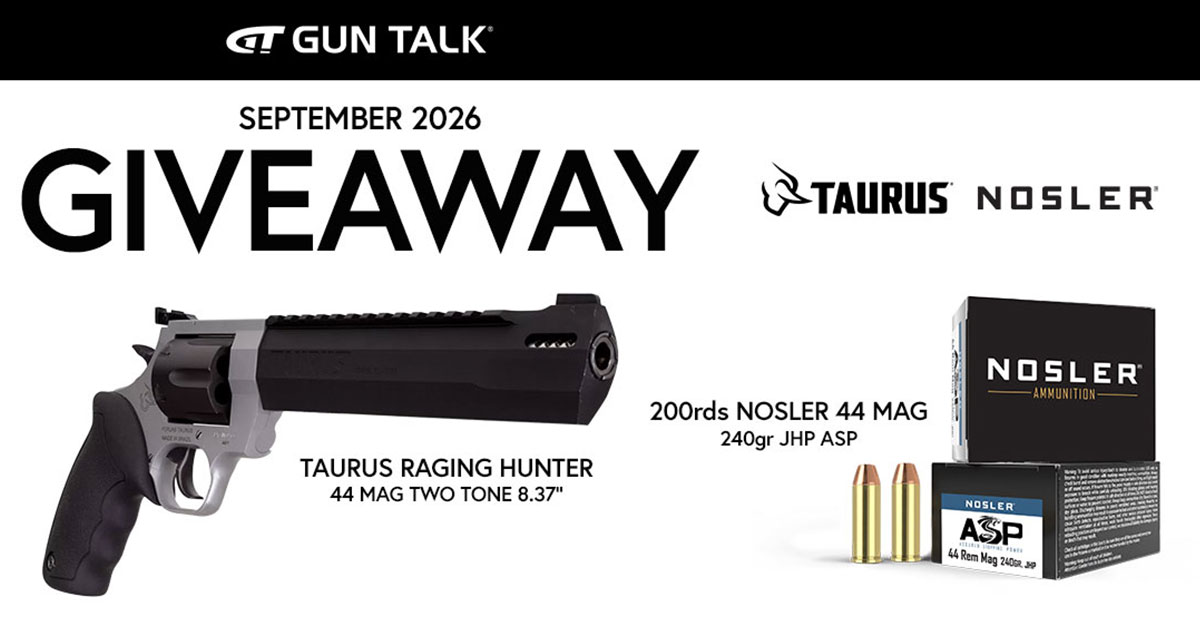
One lucky winner will bring home:
Open to U.S. residents 21+ only. Void where prohibited.