October 15, 2026
Gun Talk Staff
Heath is from Louisiana and works as an X-ray tech, specializing in surgical imaging and interventional radiology. He grew up with a gun in his hand, hunted his whole life and spent eight years in the military. He's married with two grown kids, a son in the Air Force and a daughter in college, and now that the kids are out of the house, he and his wife travel a lot. They have an RV and love to camp.
He's also candid about what he brings and what he doesn't. Guns are a major part of his hobbies, but he says his military training doesn't transfer neatly to concealed carry. Situational awareness does: always keeping your head on a swivel. He'd never been in a situation where he had to use a weapon to defend himself, and he went in wanting to learn.
“Nobody likes to be told, you could have done this better, but that's where you learn.” — Heath
The instructors liked what they saw. They also made clear that being a gun person doesn't mean you're ready for what they throw at you on the show. Since he camps, they built the scenario around the thing he loves: a quiet campsite, a long way from anyone else.
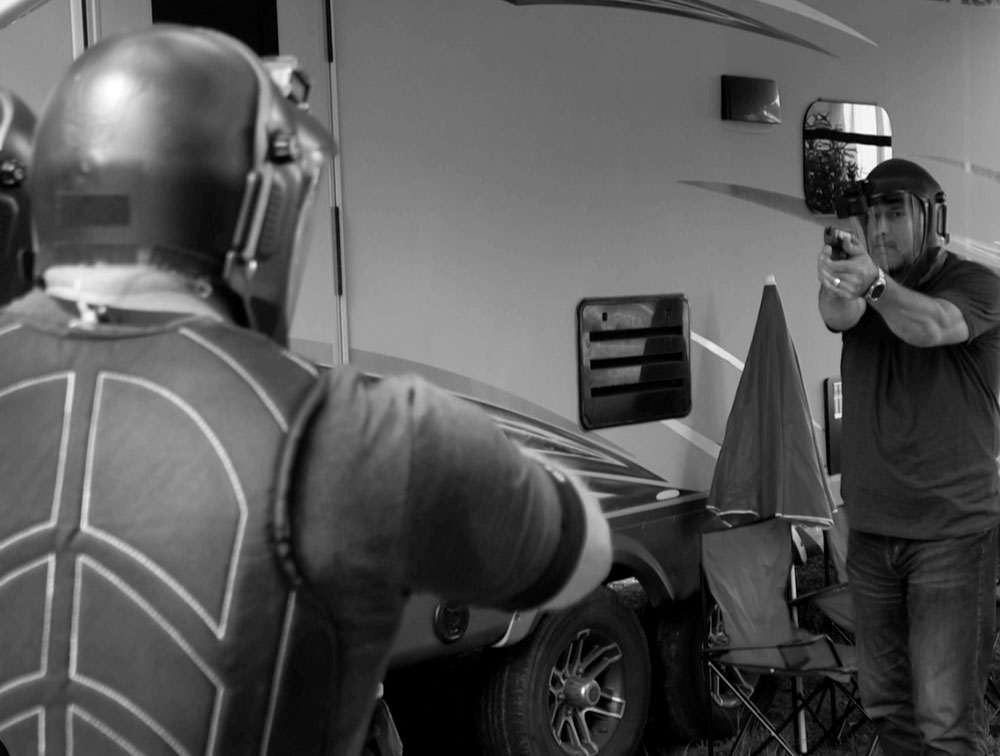
Heath is at the campsite with his son. A man walks up demanding money and food right now. He's aggressive, he ignores Heath's questions, and he doesn't leave. Heath sends his son around the back of the camper, and when the man pushes forward, Heath draws. He doesn't point the gun at him at first, just shows it, which the instructors liked.
It doesn't work. The man isn't afraid of the gun, and he keeps coming. Heath tells his son to go call 911, and the man turns his attention to Heath. Heath shoots once. The man keeps coming. He shoots again, and the man still advances. The third shot puts him down.
The obvious question: the man was unarmed, so why shoot? Heath's answer was that the man had threatened his son and then kept advancing after seeing the gun. “I didn't want to pull the trigger. He put me in the position to make me pull the trigger.” An instructor agreed the shots were justified, and pointed out that this is exactly what the bad guy had been told to do: some people keep advancing.
The critique was about everything that came before the shots. Showing a gun can antagonize someone as easily as it can stop them, and most people in their right mind will back off when a gun comes out. When one doesn't, you've learned something important about him. The instructors wanted Heath to take charge of the situation sooner and louder. Tell him to stop where he is. Tell him to leave. Tell him you don't want to shoot him, but you will.
“When it's time for violence, there cannot be any half measures.” — First Person Defender instructor
They also asked whether this was a case for less lethal. With pepper spray on him, Heath could have tried it on a man like this. But if the man had charged anyway, Heath might have ended up on his back with him, since pepper spray doesn't always work.
Between scenarios, Heath worked on two things: getting louder, and the shot he'd need if a loved one was ever in the line of fire. The instructors told him to “unleash your inner heathen” — to be demanding and forceful, tell the man exactly what to do, and mean it.
For the shot itself, the instructor set up a headshot drill at 15 feet, with a bad-guy target in the back and the rest of the target set up as no-shoot. His point: this is not a flash sight picture or a floating one. And here's the trick he showed for managing stress and nerves — keep your lips moving while you press the trigger. Talk to the target. Tell him he doesn't want to do this. If you stop talking to press the trigger, you stop thinking about the shot and start thinking about the trigger, and the shot gets worse.
He demonstrated it with “Mary Had a Little Lamb.” Keep reciting, and the shot lands. Stop mid-line to press the trigger, and it doesn't. At one point he nearly hit the good guy. The takeaway: don't stop to shoot. See the sights, feel the trigger, and press it while you aim.
Heath is back at the campsite, and the setup is familiar. This time the stranger comes with a hostage. Heath's son walks up with a stranger beside him. Heath told the instructors his son looked terrified, which put him on high alert, and he knew he'd be out of his chair right away. When the stranger advances, he shows a knife, and now he has a hostage.
Heath draws quickly, because of where they are, brings the gun up and presses the trigger on a flash of his sights. He misses the first shot. The bad guy then stabs his son once, center chest. Heath calls 911 and reports an officers-and-ambulance emergency at the campsite.
This was the part that stayed with Heath. Asked about the miss, he said it came down to processing in real time: the man has a knife to my kid's chest, his intentions are clear, and I have to make him go away. An instructor told him that if someone grabs your loved one as a hostage and doesn't kill them immediately, you probably have time, because they want to use them. If you force their hand without making a good hit, all bets are off.
“When it's real, there is no leeway when it comes to the miss.” — First Person Defender instructor
Heath was honest about it. He'd done that drill hundreds of times and made the shot hundreds of times, but on a target. With two people standing there and one of them your son, it's different. There are no warm-ups in the real world and no leeway when it comes to a miss. You either make the shot or you don't.
Scenario One worked out for Heath, but not as cleanly as it could have. Scenario Two was a reminder that doing something right a hundred times on paper doesn't guarantee the hundred-and-first when it's your own child in front of the muzzle. That's the entire point of First Person Defender: let regular people find those gaps in a place where nobody gets hurt for real. Heath told the host the experience was great, and that he would do it again.
Watch the full episode, “A Knife to His Son's Chest,” and if you've ever wondered what you'd actually do in a self-defense situation, First Person Defender is looking for its next guest — email KG at guntalk.com for more information.
Gun Talk's First Person Defender puts regular people into force-on-force self-defense scenarios. Putting you inside the fight to defend your life or the lives of your loved ones, First Person Defender shows you what can go wrong…and how fast it can happen.
First Person Defender Season 15 is brought to you by Colt, CZ Firearms, HK-USA, Ruger, Safariland, Shooting Sports Life, and VIKTOS.
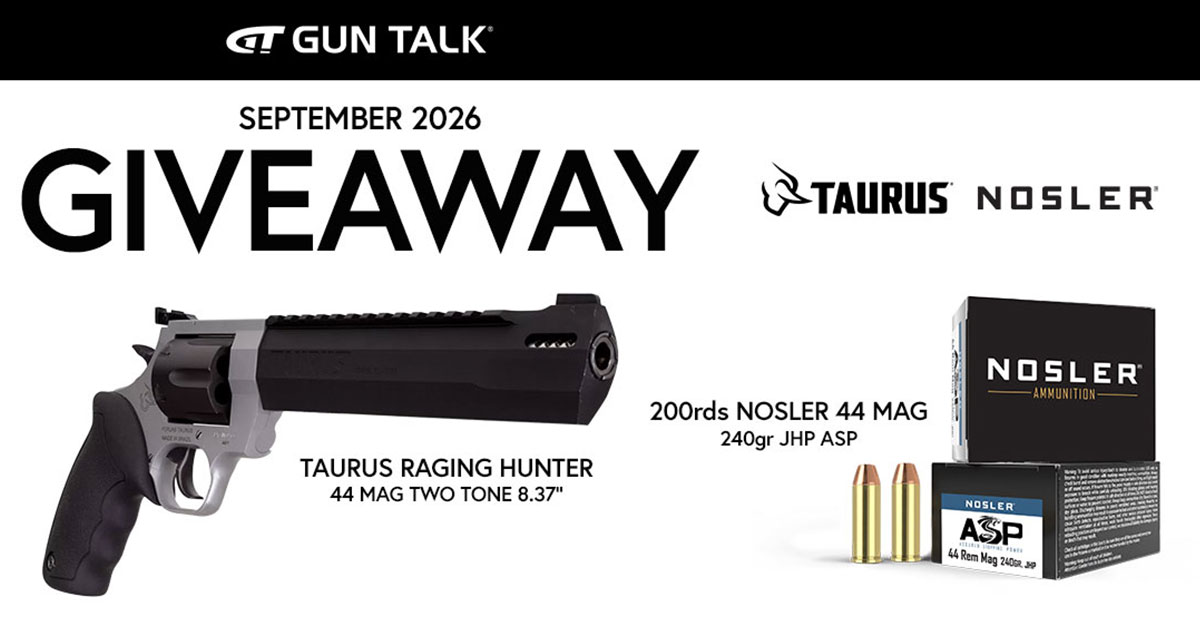
Gun Talk Giveaway
One lucky winner will bring home:
Open to U.S. residents 21+ only. Void where prohibited.