September 9, 2026
Gun Talk Staff
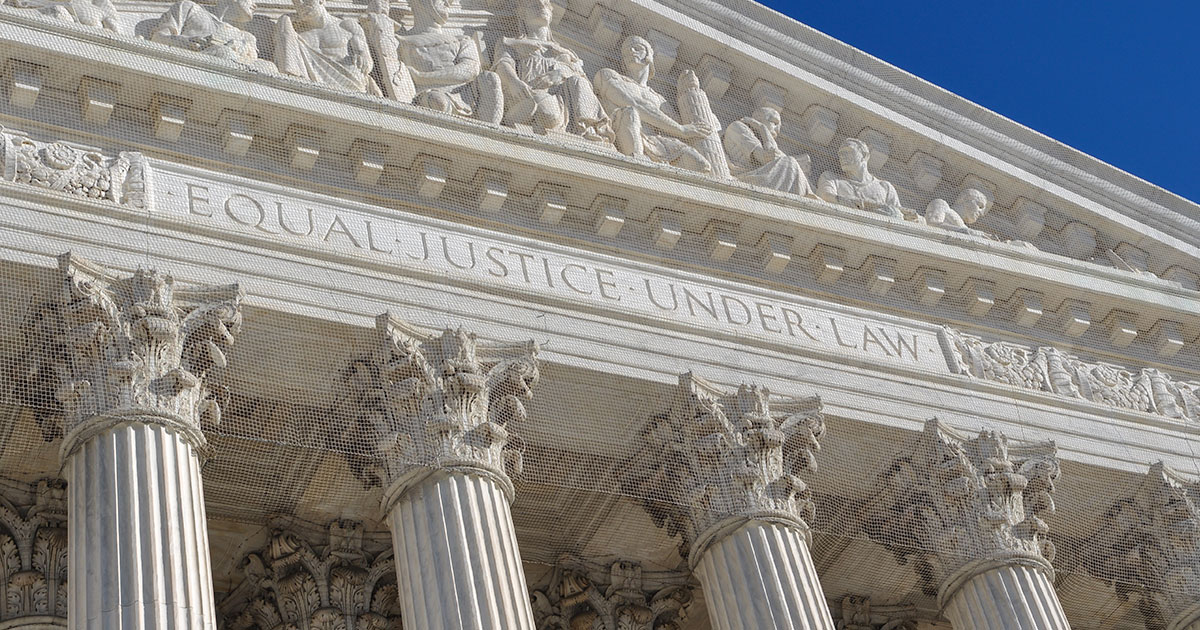
On September 2, Gun Talk Media reported that oral argument in the consolidated AR-15 ban cases was projected for the first week of December based on docket position. Days later, the Court confirmed it: oral argument is set for December 2, 2026. The projection was right and the date is now locked.
The confirmation matters for several reasons beyond the obvious. December 2 is the first Tuesday — a Wednesday, per the Court's order — of the December argument sitting, which means this is one of the cases the Court chose to lead with in its final pre-holiday argument session. Cases scheduled for the opening days of a sitting tend to receive the Court's freshest attention and the most preparation from the Justices heading into the sitting. That is not an advantage or disadvantage for either side, but it signals the Court's view of the case's importance — it is not being tucked into the back of the calendar.
The same window in which the date was confirmed, the docket received what the SAF Grassroots Judicial Report describes as a “substantial influx of amici.” The breadth and variety of amicus participation in Viramontes/Grant is itself a signal about how the legal community reads this case. This is not a niche Second Amendment dispute. It is being treated as one of the most significant constitutional cases on the October 2026 term calendar, by people on both sides of the question who have decided that filing a brief is worth the effort.
“The week's dominant development was procedural but consequential: the Supreme Court set its consolidated AR-15/semiautomatic-rifle cases for Dec. 2, while the merits docket saw a substantial influx of amici.” — SAF Grassroots Judicial Report, September 9, 2026
One hour of oral argument is allotted for the consolidated cases. The Court's practice with consolidated cases of this kind is to split argument time between the parties, with each side's time divided between the two cases. The precise time allocation will be specified in the Court's argument order, typically released a week or two before argument.
The practical picture: the petitioners' attorneys — led by Cooper & Kirk, the firm that argued Bruen — will have roughly 30 minutes to present the gun rights argument. The respondents — Cook County and Connecticut — will have roughly 30 minutes to defend their assault weapons bans. Solicitor General D. John Sauer has formally asked the Court for 10 minutes of that argument time on behalf of the United States, which filed its own amicus brief supporting the petitioners. The Court typically grants time to the Solicitor General in major constitutional cases where the government has filed on one side, which would adjust the petitioners' allotment accordingly.
A December 2 argument with the current Court's pace of decision-making puts a ruling in June 2027 — consistent with the projection in our September 2 piece. The most significant Second Amendment case since Bruen will be decided before the end of the 2026–2027 term.
Amicus curiae briefs — “friend of the court” briefs filed by parties who are not litigants but have an interest in the outcome — are not just courtesy filings. In major Supreme Court cases, the amicus roster is a window into how seriously different communities take the case and which arguments the Justices are most likely to hear from multiple angles. The Viramontes/Grant amicus roster is unusually broad.
The Trump administration filed an amicus brief in support of the petitioners — consistent with the administration's Second Amendment posture throughout 2026. Signed by Solicitor General John D. Sauer along with Assistant Attorneys General Harmeet Dhillon and Brett A. Schumate, the brief argues the right to keep and bear arms is among the “fundamental rights necessary to our system of ordered liberty” and that AR-15-platform rifles — described in the brief as the most popular rifle in the country — cannot be categorically banned consistent with that right. The Solicitor General's request for argument time is a significant resource: the SG's participation carries institutional authority with the Court and can address the national policy dimensions of the ruling that private litigants sometimes cannot.
The government's brief also carries implicit weight about how any ruling will be implemented. If SCOTUS rules for the petitioners, the administration's position on implementation will matter for how quickly and thoroughly the ruling takes effect in the twelve affected states.
A 27-state amicus coalition is one of the largest state amicus coalitions in a Second Amendment case in the modern era. These states — almost certainly the same coalition of Republican attorneys general that has filed in prior gun rights cases — are arguing that the Bruen framework correctly applies, that AR-15-platform rifles are in common use for lawful purposes, and that assault weapons bans cannot survive text-and-history scrutiny. Twenty-seven states representing roughly 175–180 million Americans filing on one side of a constitutional question is a political and legal signal that the Court is unlikely to ignore when considering the national implications of its ruling.
The NRA, the Second Amendment Foundation, the Firearms Policy Coalition, and the National Shooting Sports Foundation have all filed or are expected to file amicus briefs. Gun Owners of America and the Gun Owners Foundation have also filed, joined by a list of firearms manufacturers that reportedly includes Century Arms, CANiK USA, B&T USA, and Fostech. These organizations collectively represent the institutional infrastructure of the gun rights legal community — the entities that have litigated, funded, and coordinated Second Amendment cases from the district court level through the Supreme Court for the past two decades. Their briefs provide additional factual records on gun ownership prevalence, common use data, and the history of firearms regulation that supplement the petitioners' brief.
Law enforcement amicus participation in Second Amendment cases is historically complex — many major law enforcement organizations have sided with gun restrictions in prior cases. The specific law enforcement groups filing in Viramontes/Grant, and which side they filed on, will be worth tracking when the brief list is complete. Law enforcement voices on the common use question — AR-15-platform rifles are the standard issue patrol rifle for most American law enforcement agencies, and officers carry the same rifles that the assault weapons bans would remove from civilian hands — carry particular weight.
This is the amicus filing most worth watching, and it is filed by one of the most credentialed constitutional law scholars in the country. Akhil Reed Amar holds the Sterling Professorship at Yale Law School — the highest faculty honor at one of the nation's top law schools — and is broadly regarded as one of the foremost scholars of constitutional structure and the Bill of Rights. He is not a reflexive gun rights advocate. He is a serious constitutional scholar whose views on the Second Amendment carry genuine academic weight across the ideological spectrum.
An amicus brief in support of neither party is a brief that does not take sides on the outcome but instead argues that the Court should approach the question from a particular analytical framework — or that both parties have gotten something wrong. Amar's filing in Viramontes/Grant tells us several things. First, he thinks the case is important enough to engage with publicly. Second, he has a view on the constitutional question that does not map cleanly onto either the petitioners' or the respondents' arguments. Third, at least some of the Justices — particularly the originalist majority — will read his brief carefully.
Amar has written extensively on the Second Amendment's relationship to the militia clause, on the individual right recognized in Heller, and on the historical tradition of firearms regulation. A brief in support of neither party from this source is likely to argue that the Court needs a more nuanced analytical framework than either side is offering — not that one side should simply win. The specific argument he makes will be worth reading when the brief is publicly available on SCOTUSblog.
The USCCB filing is the amicus that will generate the most headlines from people who haven't been following the case closely, because it is unusual. The Bishops filed in support of the respondents — the states defending their assault weapons bans. Their brief argues from a public safety and moral theology perspective that the proliferation of high-capacity semi-automatic rifles presents a unique threat to human life and community safety that the state has a compelling interest in regulating.
The Bishops' brief does not argue constitutional law — it argues policy and moral weight. Its influence on the Court's legal analysis will be limited; the Bruen framework does not turn on moral theology or policy preference. But it signals the breadth of the coalition that has organized against the petitioners' position, and it will be used in public discourse to argue that opposition to assault weapons bans is not purely a secular or political phenomenon.
| June 30, 2026 | SCOTUS grants cert in both cases. Consolidated for one hour of argument. Question: whether Second Amendment protects AR-15-platform rifles in common use. |
|---|---|
| August 28, 2026 | Petitioners' merits brief filed. SAF and multiple amici file supporting briefs. |
| September 9, 2026 | SCOTUS confirms oral argument: December 2, 2026. Amicus wave confirmed: U.S. Government, 27 states, NRA, SAF, FPC, NSSF, GOA, law enforcement groups, Akhil Reed Amar (neither party), U.S. Conference of Catholic Bishops (respondents). |
| October 5, 2026 | October Term 2026 begins. |
| October 15, 2026 | New Jersey cert petition due. NJ's ban may be addressed alongside or after Viramontes/Grant. |
| October 21, 2026 | Respondents' briefs due (Cook County and Connecticut). |
| Late Oct./Nov. 2026 | Petitioners' reply brief. Final amicus filing period. |
| December 2, 2026 | CONFIRMED: Oral argument, 10 a.m. One hour total. Cooper & Kirk argue for petitioners. Cook County and CT argue for respondents. Solicitor General Sauer has requested 10 minutes for the U.S. Government. |
| June 2027 (projected) | Decision expected. Final week of June most likely given case significance. |
The gun rights community has been waiting for this date since the cert grant on June 30. It is now confirmed: December 2, 2026. The most significant Second Amendment case since Bruen goes to oral argument in less than 90 days. The amicus landscape confirms that everyone with a stake in the outcome — the government, 27 states, the entire institutional infrastructure of the gun rights legal community, and a broad coalition on the other side — has mobilized.
For the twelve states with assault weapons bans on the line, December 2 is the beginning of the end of one chapter or the beginning of another. For the gun rights community, it is the date when the constitutional question that has been building since Heller finally gets its day before the full Court on the merits.
Watch the respondents' briefs when they file October 21 — that's when Cook County and Connecticut lay out their constitutional defense. Watch the Akhil Reed Amar brief when it becomes publicly available on SCOTUSblog. And watch GunTalk.com for coverage as the December 2 argument approaches. We will have pre-argument analysis and same-day coverage.


Gun Talk Giveaway
One lucky winner will bring home:
Open to U.S. residents 21+ only. Void where prohibited.